Related Articles

Electric cars have become increasingly popular around the world. Many people are interested in electric vehicles because they are quieter, use electricity instead of traditional fuel, and can help reduce pollution from everyday driving. However, for someone who has always used a petrol or diesel car, an electric car can seem very different.
The good news is that the basic idea behind an electric car is quite simple. Instead of using a petrol engine to create power, an electric car uses electricity stored in a battery. This electricity is sent to an electric motor, which turns the wheels and moves the vehicle forward.
Understanding how electric cars work can help beginners make better decisions when buying, driving, charging, or maintaining an electric vehicle. In this guide, we will look at the main parts of an electric car and explain how they work together in simple language.
What Is an Electric Car?
An electric car is a vehicle that uses electricity as its main source of energy. Most fully electric cars do not have a traditional petrol or diesel engine. Instead, they use a large rechargeable battery and one or more electric motors.
When you charge an electric car, electrical energy is stored inside the battery. When you drive, the battery sends electricity to the motor. The motor then converts electrical energy into mechanical energy that turns the wheels.
This process is different from a traditional car. A petrol car burns fuel inside an engine to create power. An electric car uses electrical energy to operate its motor.
Electric cars are often called EVs, which means electric vehicles. Some vehicles can use both electricity and petrol. These are called hybrid or plug in hybrid vehicles. A fully electric car depends mainly on electricity and does not need petrol for normal driving.
The Main Parts of an Electric Car
Although electric cars can look similar to normal cars from the outside, their internal systems are quite different.
The main parts include the battery pack, electric motor, inverter, charging system, transmission, regenerative braking system, and electronic control systems.
Each part has an important job. Together, these components allow the electric car to store energy, produce power, control speed, and move safely on the road.
The Electric Car Battery
The battery is one of the most important parts of an electric car. It stores the electrical energy needed to power the vehicle.
Most modern electric cars use lithium ion battery technology. The battery contains many smaller cells that are connected together to create a larger battery pack.
The size of the battery is usually measured in kilowatt hours, written as kWh. A larger battery can generally store more energy, although the driving range also depends on the vehicle’s weight, speed, weather, road conditions, and driving habits.
For example, a car with a larger battery may be able to travel farther on a single charge than a similar vehicle with a smaller battery.
The battery does not simply send electricity directly to the wheels. The stored electricity passes through several electrical systems before reaching the motor.
How the Electric Motor Works
The electric motor is the part that actually creates movement.
When you press the accelerator pedal, the car’s electronic control system determines how much power is needed. Electricity then flows from the battery to the motor.
Inside the motor, electrical energy creates magnetic forces. These forces cause the motor to rotate. The rotation is transferred through the vehicle’s drivetrain to the wheels.
One interesting feature of electric motors is that they can produce strong torque very quickly. Torque is the turning force that helps a vehicle accelerate.
This is one reason electric cars can feel very responsive when you press the accelerator.
Unlike many petrol engines, an electric motor does not need to build up engine speed in the same way before producing useful torque. This gives many electric cars smooth and quick acceleration.
What Happens When You Press the Accelerator?
The accelerator pedal in an electric car does not work exactly like the accelerator in a traditional petrol car.
When you press the pedal, sensors detect the movement and send information to the vehicle’s electronic control system.
The control system decides how much electrical power should be delivered to the motor.
The battery provides the electricity. The inverter manages the electrical power supplied to the motor. The motor converts that electrical energy into rotation, and the rotation moves the wheels.
This entire process happens very quickly.
When you release the accelerator, the car can also begin slowing down because the motor may work in reverse as part of the regenerative braking system.
What Is an Inverter?
The inverter is another important component of an electric car.
The battery normally stores electricity as direct current, commonly known as DC. Many electric motors use alternating current, commonly known as AC.
The inverter helps convert and control electrical power between the battery and motor.
It also controls how much electricity reaches the motor. This allows the vehicle to manage acceleration, speed, and energy use.
In simple terms, you can think of the inverter as an important electrical controller between the battery and motor.
How Electric Cars Are Charged
Charging an electric car is similar to charging other battery powered devices, but the amount of energy involved is much greater.
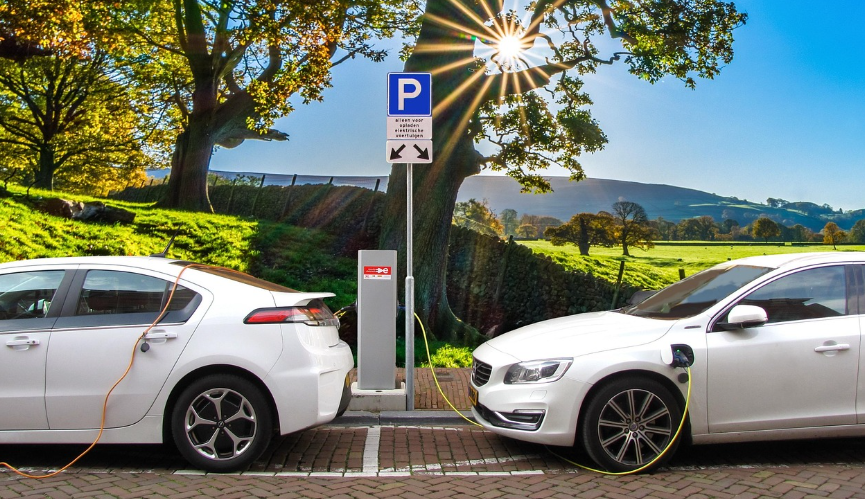
An electric car can usually be charged at home, at a workplace, or at a public charging station.
Home charging is convenient because the car can be connected when it is parked. Depending on the charger and electrical supply, charging may take several hours.
Public fast chargers can provide electricity much more quickly. The actual charging time depends on the vehicle, charger, battery size, battery temperature, and current battery level.
Many electric cars charge more slowly when the battery is almost full. This is normal and helps protect the battery.
Different Types of EV Chargers
There are several types of electric vehicle charging systems.
Basic home charging uses a standard electrical connection. It is usually the slowest option but can be useful for drivers who travel shorter distances.
A dedicated home charger can provide more power and reduce charging time.
Public fast charging stations can provide much higher charging power. These chargers are useful during long trips when drivers need to add energy quickly.
The exact charging speed depends on both the charger and the vehicle. Having a powerful charger does not always mean that a car will charge at the maximum possible speed.
What Is Regenerative Braking?
Regenerative braking is one of the most interesting features of an electric car.
In a traditional car, braking normally turns much of the vehicle’s movement energy into heat through the brake system.
An electric car can recover some of this energy.
When the driver slows down or releases the accelerator, the electric motor can work as a generator. Instead of using electricity to create movement, the motor uses the movement of the wheels to generate electrical energy.
Some of this energy can be sent back to the battery.
This process is called regenerative braking.
It does not recover all of the energy used to move the vehicle, but it can improve efficiency and reduce the amount of energy wasted during braking.
Regenerative braking can also reduce the use of traditional friction brakes, which may help extend brake component life.
How Does an Electric Car Stop?
Electric cars still have normal braking systems. They use brake discs, pads, and other components similar to those found in conventional vehicles.
However, regenerative braking can handle part of the slowing process.
When stronger braking is required, the traditional friction brakes can also be used.
Modern electric cars automatically manage these systems to provide smooth and controlled braking.
For the driver, the experience can feel different because some electric cars slow down significantly when the accelerator is released.
How Electric Cars Save Energy
Electric cars are designed to use energy efficiently.
A petrol engine loses a considerable amount of energy as heat during the process of producing movement. Electric motors can use electrical energy more efficiently for driving.
Electric vehicles can also recover some energy through regenerative braking.
Other systems also affect efficiency. Air conditioning, heating, high speeds, heavy loads, tire pressure, road conditions, and weather can all influence how much electricity the car uses.
This is why the real driving range of an electric car can change from one trip to another.
What Determines Electric Car Range?
Electric car range means how far the vehicle can travel before the battery needs to be recharged.
Battery size is an important factor, but it is not the only one.
Driving speed has a major effect. Driving at high speeds generally requires more energy because air resistance increases.
Weather can also affect range. Very cold or very hot conditions may increase energy consumption because the car may need to use energy for battery temperature management, heating, or cooling.
The weight of the vehicle also matters. Carrying heavy passengers or large amounts of cargo can increase energy use.
Tire pressure is another simple factor. Properly inflated tires can help the vehicle operate efficiently.
Driving style also makes a difference. Rapid acceleration and frequent high speed driving can use more electricity than smooth and steady driving.
How Does the Battery Stay Safe?
Electric car batteries contain a large amount of stored energy, so safety is extremely important.
Modern electric cars use battery management systems to monitor the battery.
These systems can monitor factors such as temperature, voltage, and charging conditions.
The battery may also have cooling or heating systems to help keep it within an appropriate operating range.
If the system detects a problem, the vehicle can reduce power or take other protective actions.
Battery packs are also placed in strong protective structures designed to reduce the risk of damage during a crash.
Electric vehicles must meet safety requirements before they can be sold for road use.
What Is a Battery Management System?
A battery management system, often called a BMS, helps monitor and manage the battery pack.
The system keeps track of individual battery cells and helps maintain safe operating conditions.
It can monitor temperature and electrical conditions and help prevent situations that could damage the battery.
The battery management system is important for both safety and battery life.
Without proper monitoring, a large battery pack would be much more difficult to manage safely and efficiently.
How Long Does an Electric Car Battery Last?
Electric car batteries are designed to last for many years.
Battery capacity can gradually decrease over time. This means an older battery may not hold as much energy as it did when it was new.
The speed of battery aging depends on many factors. Temperature, charging habits, driving patterns, battery design, and the way the vehicle is used can all have an effect.
Modern electric vehicles include battery management systems that are designed to protect the battery and support long term performance.
Drivers can also follow the manufacturer’s charging and storage recommendations.
Do Electric Cars Have Gears?
Most electric cars do not need the traditional multi speed transmission used by many petrol and diesel vehicles.
An electric motor can operate effectively across a wide range of speeds. Because of this, many electric cars use a simple single speed transmission.
The motor sends rotational power through the drivetrain to the wheels.
This simpler arrangement means electric cars can have fewer moving parts in the drivetrain compared with traditional vehicles.
However, some electric vehicles may use different transmission designs depending on their performance and engineering requirements.
Why Are Electric Cars So Quiet?
Electric cars are generally much quieter than petrol and diesel vehicles.
A traditional engine produces sound from combustion and many moving mechanical parts.
An electric motor operates much more quietly.
However, electric cars are not completely silent. You can still hear tire noise, wind noise, and other sounds while driving.
At lower speeds, some electric vehicles use artificial sounds to help pedestrians notice the vehicle. This is particularly useful because pedestrians may not hear a quiet vehicle approaching.
What Happens When an Electric Car Runs Out of Charge?
An electric car cannot continue driving once its usable battery energy is exhausted.
The vehicle normally provides warnings as the battery level becomes low. Drivers should use these warnings to find a suitable charging station or reach a charging location.
Some vehicles may reduce performance when the battery becomes very low. Eventually, the vehicle will stop if there is not enough energy remaining.
This is why planning is important during long trips.
Drivers should consider the distance they need to travel, available charging stations, weather, traffic, and possible changes in energy consumption.
Are Electric Cars Expensive to Maintain?
Electric cars can have different maintenance requirements from traditional vehicles.
They do not need engine oil changes because they do not have a conventional combustion engine.
They also have fewer engine components that require regular maintenance.
However, electric cars still need tires, brakes, suspension components, windshield fluid, cooling systems, and other regular checks.
The battery and electrical systems may require specialized service if a serious problem occurs.
Maintenance costs vary depending on the vehicle model, age, usage, and local service availability.
Electric Cars and the Environment
One of the major reasons people choose electric cars is the possibility of reducing emissions from driving.
A fully electric car does not produce exhaust emissions from a petrol or diesel engine while it is being driven.
However, electricity must still be produced somewhere, and battery manufacturing also requires energy and raw materials.
The environmental benefits of electric vehicles therefore depend partly on how electricity is generated and how the vehicle and battery are manufactured.
Even with these factors, electric cars can play an important role in reducing emissions from transportation, especially when they are charged using cleaner sources of electricity.
Are Electric Cars Good for Beginners?
Electric cars can be a good option for beginners who understand their basic requirements.
They are simple to operate, quiet, and often provide smooth acceleration.
Charging is one of the biggest differences compared with traditional cars. Instead of visiting a petrol station whenever the fuel tank is low, electric car owners need access to suitable charging options.
For people who mostly drive short daily distances, home charging can be particularly convenient.
For people who regularly travel long distances, it is important to understand the available charging network and plan stops in advance.
Final Thoughts
Understanding how electric cars work is easier when the system is broken into simple parts.
The battery stores electrical energy. The inverter controls electrical power. The electric motor converts electricity into movement. The drivetrain sends that movement to the wheels. Regenerative braking can recover some energy when the vehicle slows down, while the battery management system helps monitor and protect the battery.
Electric cars work differently from traditional petrol and diesel vehicles, but the basic purpose remains the same. They are designed to provide safe, practical, and efficient transportation.
For beginners, the most important thing to remember is that an electric car does not need petrol to create movement. It stores electricity in a battery and uses an electric motor to turn that stored energy into motion.
As charging networks continue to develop and battery technology improves, electric cars are becoming easier for more people to understand and use. Learning the basics can help any new driver feel more comfortable with electric vehicle technology and make better decisions about charging, driving, maintenance, and long term ownership.