Related Articles

Electric cars have become an important part of modern transportation. Unlike traditional cars that use petrol or diesel to produce power, electric cars use electricity stored in a battery. This electricity is sent to an electric motor, which changes electrical energy into mechanical energy and turns the wheels.
For someone who is new to electric vehicles, the basic idea may sound complicated. In reality, the process is quite simple when it is explained step by step. Electricity moves from the battery through several important components before reaching the electric motor. The motor then uses that electrical energy to create movement.
Understanding how electric cars use electricity to move can help drivers learn more about electric vehicle technology, battery performance, charging, energy efficiency, and everyday driving.
What Is an Electric Car?
An electric car is a vehicle that uses one or more electric motors for propulsion. The energy needed by the motor usually comes from a rechargeable battery pack installed inside the vehicle.
A traditional gasoline car has an engine that burns fuel. The burning process creates energy that eventually turns the wheels. An electric car follows a different method.
Instead of burning fuel, an electric car stores electrical energy in its battery. When the driver presses the accelerator, the vehicle sends electricity from the battery to the motor. The motor produces rotational force, which turns the wheels.
This system has fewer moving parts than a traditional internal combustion engine. It also allows an electric car to respond quickly when the driver asks for more power.
Where Does the Electricity Come From?
The electricity used by an electric car is stored in its battery. Before the car can move, the battery needs to be charged.
Most electric cars use large lithium ion battery packs. These battery packs contain many individual battery cells connected together. The cells store electrical energy in chemical form.
When the vehicle is connected to a charging station, electrical energy enters the battery. The battery stores that energy until the vehicle is ready to drive.
The electricity can come from different sources. A home charging system may receive electricity from the local power grid. Public charging stations also receive electricity from the grid. Some electric car owners use solar panels to generate electricity and charge their vehicles.
This means the electricity used to move an electric car may come from a combination of sources depending on where and how the vehicle is charged.
The Role of the Electric Car Battery
The battery is one of the most important components of an electric car. It acts as the energy storage system for the vehicle.
When the battery is fully charged, it contains a certain amount of usable electrical energy. The available energy depends on the battery capacity, which is normally measured in kilowatt hours.
For example, a battery with a capacity of 60 kilowatt hours can store more energy than a battery with a capacity of 40 kilowatt hours.
However, battery size is not the only factor that affects driving range. Vehicle weight, speed, weather, road conditions, driving style, tire pressure, and heating or cooling systems can also affect how much electricity the car uses.
The battery sends electricity to the vehicle’s electrical system when the car is running. A control system manages this flow so that the motor receives the amount of power needed by the driver.
What Happens When You Press the Accelerator?
The process of moving an electric car begins when the driver presses the accelerator pedal.
In a gasoline car, pressing the accelerator usually increases the amount of fuel and air entering the engine. In an electric car, the process is different.
When the driver presses the accelerator, sensors detect the position of the pedal. The vehicle’s control system then determines how much electrical power should be sent to the motor.
More pressure on the accelerator generally tells the system that the driver wants more power. The battery then supplies electricity to the motor through the vehicle’s power electronics.
The electric motor responds very quickly and produces torque. This torque is transferred to the wheels and causes the vehicle to move forward.
The entire process happens very quickly. There is no need for the engine to burn fuel or wait for multiple mechanical steps before producing useful driving force.
How the Electric Motor Creates Movement
The electric motor is the component that converts electrical energy into mechanical energy.
Electric motors work because electricity and magnetic fields can interact with each other.
Inside an electric motor are important components such as coils and magnets. When electrical current passes through the motor’s windings, it creates magnetic forces. These forces cause parts of the motor to rotate.
The rotating part of the motor is connected to the drivetrain. As the motor spins, its rotation is transferred to the wheels.
This is the key reason an electric car can move without using a gasoline engine. The motor receives electrical energy and converts it into rotational movement.
Electric motors can also produce strong torque at very low speeds. This gives many electric cars quick acceleration from a stop.
What Is Torque?
Torque is a turning force. It is important because the wheels need turning force to move the car.
Electric motors are especially useful for vehicles because they can produce high torque almost immediately.
Imagine pushing a heavy object. A strong push can make the object begin moving. In a similar way, motor torque helps the wheels overcome the resistance that keeps a stationary vehicle from moving.
When the driver presses the accelerator, the electric motor can quickly increase its torque. This is one reason electric cars often feel very responsive during acceleration.
The amount of torque produced depends on the motor design, electrical power, vehicle software, and other factors.
The Role of the Inverter
An electric car battery stores electrical energy in direct current form. Many electric motors used in electric vehicles operate using alternating current.
The inverter helps manage this difference.
The inverter converts and controls the electrical energy supplied to the motor. It determines how much electrical power the motor receives and helps control the motor’s speed and torque.
When the driver requests more acceleration, the inverter can increase the electrical power delivered to the motor.
When less power is needed, the system can reduce the electrical supply.
This makes the inverter an important part of the electric vehicle powertrain.
How Electricity Reaches the Wheels
The battery does not directly turn the wheels. Instead, electricity travels through a series of systems.
The general process looks like this:
Battery stores electrical energy.
Power electronics control the electrical energy.
The inverter supplies suitable electrical power to the motor.
The electric motor converts electrical energy into rotation.
The drivetrain transfers that rotation to the wheels.
The wheels turn against the road surface and move the vehicle forward.
Different electric cars use different drivetrain designs. Some have a motor that powers the front wheels. Others use a motor for the rear wheels. Some high performance electric vehicles use separate motors for the front and rear axles.
The basic principle remains the same. Electrical energy is converted into mechanical energy that creates movement.
Why Electric Cars Do Not Need Traditional Gearboxes
Traditional gasoline vehicles usually use transmissions with several gears. The transmission helps the engine operate efficiently across different speeds.
Electric motors have a different operating characteristic. They can produce useful torque across a wide range of speeds.
Because of this, many electric cars do not need a traditional multi gear transmission.
Most electric vehicles use a simple single speed reduction system. The motor can spin at high speed while the reduction gear adjusts the speed and torque delivered to the wheels.
This simpler drivetrain is one reason electric cars can have fewer mechanical components than gasoline powered vehicles.
What Is Regenerative Braking?
Electric cars can also use electricity in a reverse process when slowing down.
This is known as regenerative braking.
When a traditional car slows down, much of its movement energy is converted into heat through the brakes.
In an electric car, the motor can sometimes work as a generator during deceleration. Instead of using electricity to create movement, the motor uses the movement of the wheels to generate electrical energy.
Some of this energy can be sent back to the battery.
This process is not perfectly efficient, so the car cannot recover all of the energy used during acceleration. However, regenerative braking can recover some energy that would otherwise be lost as heat.
Drivers may notice that an electric car begins slowing down when they release the accelerator. This behavior is often called one pedal driving when the system is designed to provide strong regenerative braking.
How Speed Affects Electricity Use
An electric car does not use the same amount of electricity at every speed.
Driving slowly on a smooth road may require relatively little energy. Driving at high speed usually requires more energy because air resistance increases significantly as speed rises.
The motor must work harder to maintain higher speeds.
Other factors also affect electricity consumption. Carrying heavy loads requires additional energy. Driving uphill requires more power than driving on level ground. Cold weather can also reduce efficiency because the battery performs differently at low temperatures and the heating system may require additional energy.
This is why the real world driving range of an electric car can vary depending on driving conditions.
How Air Conditioning Uses Electricity
Electric cars also use electricity for systems that do not directly move the vehicle.
Air conditioning and heating are good examples.
In a traditional gasoline car, some heating energy can come from waste heat produced by the engine. An electric car does not have the same source of engine heat.
As a result, heating systems may use electricity from the battery.
Air conditioning also requires electrical energy. When the air conditioning system operates for long periods, it can increase the vehicle’s energy consumption.
This does not mean drivers should avoid using climate control. It simply means that comfort systems are another part of the vehicle’s total electricity use.
How Electric Cars Manage Battery Power
Electric cars have sophisticated battery management systems.
The battery management system monitors important information such as cell voltage, temperature, current, and state of charge.
It helps keep the battery operating within safe limits.
The system can also balance the performance of individual battery cells. This is important because the battery pack contains many cells working together.
Battery management is important for safety, performance, battery life, and reliable operation.
The vehicle’s computer systems constantly monitor conditions and adjust power delivery when necessary.
What Happens When the Battery Gets Low?
As an electric car uses energy, the battery’s state of charge decreases.
The driver can normally see the remaining battery percentage on the dashboard.
When the battery becomes low, the vehicle provides warnings. Some electric cars may also reduce available power when the battery is extremely low.
Eventually, the vehicle needs to be charged.
The exact driving range available after a low battery warning depends on the vehicle, driving conditions, battery condition, temperature, and driving style.
For this reason, electric car drivers usually plan charging in a similar way to how traditional drivers plan fuel stops.
How Charging Restores Electrical Energy
Charging reverses the energy storage process.
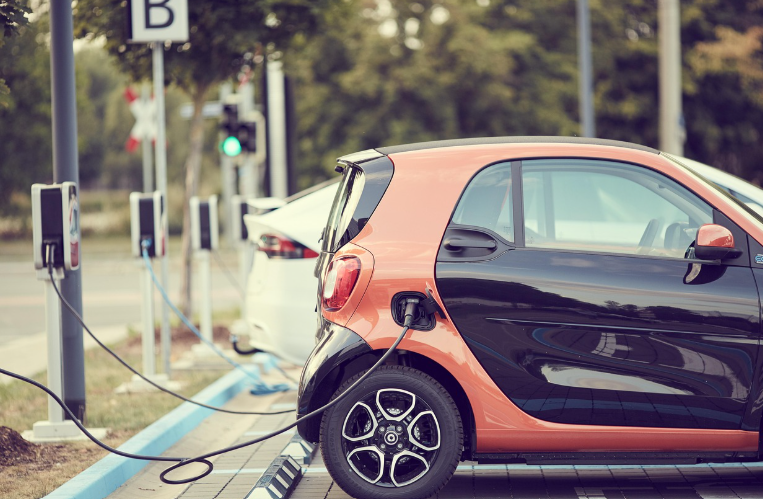
When an electric car is connected to a charger, electricity flows into the vehicle. The charging system manages the incoming electrical energy and sends it to the battery.
There are different types of charging systems.
Home charging is convenient because the vehicle can often be charged overnight.
Public charging stations can be useful during longer journeys.
Fast charging stations can provide a large amount of energy in a relatively short period, although charging speed depends on the vehicle, charger, battery temperature, battery state of charge, and other conditions.
Charging is not exactly the same as filling a gasoline tank. The time required can vary significantly depending on the charging equipment.
Why Electric Cars Are Energy Efficient
Electric motors are generally very efficient at converting electrical energy into movement.
A gasoline engine loses a significant amount of energy as heat during fuel combustion. An electric motor does not rely on combustion.
Electric vehicles also benefit from regenerative braking, which can recover some energy during deceleration.
However, an electric car still uses energy for many purposes. The battery has to power the motor, climate control, lights, electronics, and other systems.
The overall efficiency of an electric vehicle depends on the vehicle design and driving conditions.
Do Electric Cars Use Electricity While Parked?
An electric car can use a small amount of electricity even when it is parked.
Various systems may remain active, including security systems, communication equipment, battery management systems, and temperature control features.
Some electric cars also allow owners to control charging or climate settings remotely through a smartphone application.
The amount of energy used while parked is usually much smaller than the energy required for driving, but it can still matter if the car remains unused for a long time.
Why Electric Cars Feel Different to Drive
Electric cars can feel different from gasoline cars because of the way their motors deliver power.
The electric motor can provide strong torque quickly. This can make acceleration feel smooth and immediate.
Electric cars are also generally quieter because they do not have a gasoline engine running through repeated combustion cycles.
Many electric vehicles have a low center of gravity because the battery pack is installed low in the vehicle. This can affect handling and stability.
The driving experience varies from one model to another, but the basic electric power system remains similar.
Common Factors That Reduce Electric Car Range
Several factors can increase electricity consumption.
High speeds can use more energy because of air resistance.
Cold weather can affect battery performance and increase heating demand.
Heavy loads require more energy.
Steep hills require additional power.
Low tire pressure can increase rolling resistance.
Aggressive acceleration can consume more electricity.
Frequent use of heating and air conditioning can also increase energy consumption.
Learning these factors can help electric car owners improve their driving range.
How Drivers Can Save Electricity
Drivers can improve electric car efficiency through simple habits.
Maintaining correct tire pressure is important.
Avoiding unnecessary high speeds can reduce energy consumption.
Smooth acceleration and braking can also help.
Using regenerative braking effectively can recover some energy during slowing.
Removing unnecessary heavy items from the vehicle can reduce weight.
Planning charging stops before a long journey can also make driving more convenient.
Small changes in driving habits can make a noticeable difference over time.
The Future of Electric Car Technology
Electric car technology continues to develop. Manufacturers are working on better batteries, faster charging systems, more efficient motors, and improved power electronics.
Battery technology is especially important because battery capacity affects driving range, vehicle weight, charging requirements, and cost.
Future electric vehicles may become more efficient and offer longer ranges while using improved battery materials and designs.
Charging infrastructure is also expanding in many parts of the world.
As technology improves, electric cars are expected to become an increasingly common part of transportation.
Final Thoughts
Electric cars use electricity in a straightforward but highly advanced process. The battery stores electrical energy, the power electronics control that energy, and the electric motor converts it into mechanical movement.
When the driver presses the accelerator, electricity moves from the battery to the motor. The motor creates torque, the drivetrain transfers that torque to the wheels, and the wheels move the car along the road.
Electric cars also use electricity for important systems such as heating, cooling, lighting, and electronics. During braking, some electric vehicles can recover part of the vehicle’s movement energy through regenerative braking and return it to the battery.
The technology may seem complex when all of its components are considered separately, but the main idea is simple. Electric cars store electricity in a battery and use an electric motor to turn that electrical energy into movement.
Understanding this basic process makes it easier to learn about electric vehicle batteries, charging, driving range, energy efficiency, and the future of electric transportation.