Related Articles

Electric cars are becoming more popular because they offer a cleaner and quieter way to travel. Many people are interested in buying an electric car, but one of the biggest questions is how much it actually costs to own one. The purchase price is only one part of the total cost. Charging, maintenance, insurance, taxes, tires, and other expenses also affect the overall cost of electric car ownership.
The good news is that an electric car can be less expensive to operate than a traditional gasoline car in many situations. However, the total cost depends on the vehicle, driving habits, electricity prices, insurance rates, and local conditions. Understanding these costs can help you decide whether an electric car is the right choice for your budget.
Electric Car Purchase Price
The first major expense is the purchase price. Electric cars are available in different price ranges, from smaller affordable models to expensive luxury vehicles. In many markets, electric cars can have a higher upfront price than similar gasoline cars because of the cost of the battery and electric technology.
However, the price difference is changing as battery technology improves and more manufacturers produce electric vehicles. Some governments and local authorities also offer incentives, rebates, or tax benefits for electric vehicle buyers. These programs can reduce the initial cost.
When comparing electric cars, it is important to look beyond the sticker price. A vehicle with a higher purchase price may still cost less over several years because of lower fuel and maintenance expenses.
Charging Costs
Charging is one of the most important parts of electric car ownership. Instead of buying gasoline, electric car owners pay for electricity to charge the vehicle battery.
Home charging is usually one of the most convenient options. If you have access to a home charger, you can charge your electric car overnight or whenever the vehicle is parked. The exact cost depends on your electricity rate and the amount of energy your car uses.
For example, if an electric car uses around 20 kilowatt hours of electricity to travel 100 kilometers, the charging cost depends on the price of one kilowatt hour in your area. If electricity is inexpensive, daily driving can be very affordable.
Public charging stations can be more expensive. Some stations charge according to electricity usage, while others may use time based or subscription pricing. Fast charging can also cost more than regular charging. For people who frequently use public chargers, charging expenses can become a larger part of the ownership budget.
Electric Car Maintenance Costs
One major advantage of electric cars is that they generally require less routine maintenance than gasoline vehicles. Traditional cars have engines with many moving parts and require services such as oil changes, engine filter replacements, spark plug replacements, and other engine related maintenance.
Electric cars do not have traditional engines or engine oil. Their electric motors have fewer moving components, which can reduce the number of mechanical services required.
Electric car owners may still need to pay for tire rotations, brake inspections, cabin air filters, windshield wipers, tires, and other regular items. Brake components can sometimes last longer because regenerative braking helps slow the vehicle while recovering energy.
Lower maintenance costs can make a significant difference over several years of ownership. However, electric cars are not completely maintenance free. Battery and electrical systems can also require specialized service if a problem occurs.
Battery Replacement and Battery Life
The battery is one of the most valuable components of an electric car. Many potential buyers worry about battery replacement costs. Modern electric vehicle batteries are designed to last for many years, but battery performance can gradually decrease over time.
Battery replacement can be expensive, although complete replacement is not a normal yearly maintenance expense. Many electric cars also come with long battery warranties, giving owners additional protection.
Battery life depends on factors such as vehicle design, climate, charging habits, mileage, and battery management technology. Following the manufacturer’s charging recommendations can help maintain battery health.
For most buyers, battery replacement should be considered as a possible long term expense rather than a regular ownership cost.
Insurance Costs
Insurance is another important part of electric car ownership. Insurance prices vary significantly depending on the driver, location, vehicle model, driving record, coverage level, and insurance company.
Some electric cars may have higher insurance costs because their technology and parts can be expensive to repair. Specialized electrical components and battery systems may increase repair costs after serious accidents.
On the other hand, insurance costs are not automatically higher for every electric car. Affordable electric models can have competitive insurance rates. It is a good idea to request insurance quotes for several models before buying a vehicle.
Tires and Other Running Costs
Electric cars can be heavier than some gasoline cars because of their large battery packs. They also produce strong instant torque. These factors can affect tire wear depending on the vehicle and driving style.
Replacing tires is therefore an expense that should be included in your electric car ownership budget. Choosing high quality tires and maintaining the correct tire pressure can help improve tire life.
Other running costs may include windshield washer fluid, wiper blades, cabin filters, registration fees, parking charges, and occasional repairs. These costs are usually smaller than fuel and major maintenance expenses, but they still contribute to the total cost of ownership.
Electricity Versus Gasoline Costs
One of the biggest reasons people consider electric cars is the potential saving on energy costs. Gasoline prices can change frequently, while electricity prices may be more predictable depending on your location and utility plan.
An electric car can travel a significant distance using relatively little electricity. If you mainly charge at home and have reasonable electricity rates, the cost per kilometer can be lower than driving a gasoline vehicle.
However, the savings depend on your situation. Someone who relies heavily on expensive public fast chargers may not save as much. Driving efficiency, weather, traffic, vehicle size, and electricity prices all influence charging costs.
For this reason, calculating your expected yearly mileage and local energy prices is one of the best ways to estimate your personal savings.
Depreciation and Resale Value
Depreciation is often overlooked when people calculate how much it costs to own a car. Depreciation means the reduction in a vehicle’s value over time.
Electric car resale values can vary widely depending on the model, battery condition, technology, demand, and market conditions. Rapid improvements in electric vehicle technology can sometimes affect the value of older models.
A popular electric car with good battery health and strong demand may retain its value better than an unpopular model. Before purchasing, researching the expected resale value of the vehicle can give you a better idea of its long term ownership cost.
Home Charger Installation
If you want convenient home charging, you may need to install a home charging system. The cost depends on your electrical setup, charger type, installation requirements, and local labor prices.
Some owners can use a standard household electrical outlet for slower charging. Others prefer a dedicated home charger because it can charge the vehicle more quickly.
The installation cost is generally a one time expense, but it should be included when calculating the total cost of owning an electric car.
Long Term Electric Car Ownership Cost
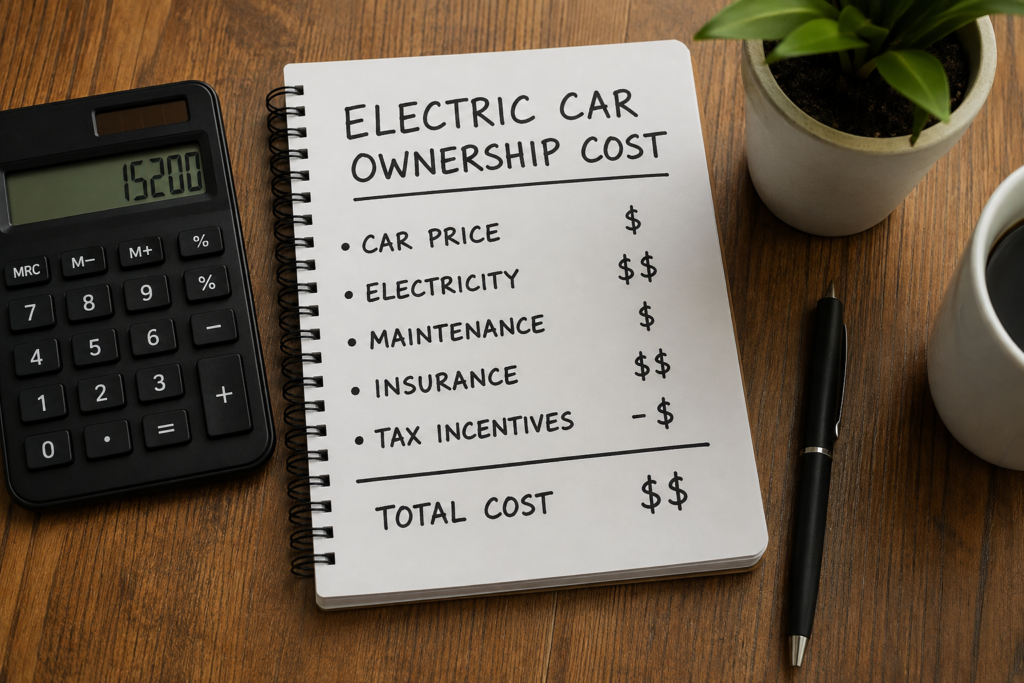
The total cost of owning an electric car becomes easier to understand when you look at several years instead of only the purchase price.
For example, imagine two vehicles with similar purchase prices. One uses gasoline while the other uses electricity. The gasoline vehicle may require regular oil changes, engine maintenance, fuel purchases, and other services. The electric vehicle may require more charging but less routine mechanical maintenance.
Over five or more years, the difference in fuel and maintenance expenses can become substantial. However, depreciation, insurance, financing costs, taxes, and unexpected repairs should also be considered.
The best approach is to calculate the total cost of ownership rather than focusing on one expense.
How to Reduce Electric Car Ownership Costs
There are several ways to keep electric car expenses under control. Charging at home can often be more economical than depending on public fast charging. Comparing electricity plans may also help reduce charging expenses.
Driving smoothly can improve efficiency and reduce tire wear. Keeping tires properly inflated can also help the vehicle use less energy.
Choosing an electric car that matches your actual needs is another important step. A larger and more expensive electric SUV may cost significantly more than a smaller electric car. If you mainly drive short distances in a city, a smaller model may provide better value.
It is also useful to compare insurance quotes and understand the warranty before purchasing. A good warranty can provide valuable protection against unexpected repair costs.
Is an Electric Car Worth the Cost?
For many drivers, an electric car can be a cost effective choice over the long term. The initial purchase price may be higher for some models, but lower charging and maintenance expenses can help balance the difference.
Electric cars can be especially attractive for people who drive regularly and can charge at home. Drivers who travel long distances frequently or depend entirely on public charging should carefully compare charging prices before making a decision.
The right choice depends on your driving needs, budget, local electricity prices, insurance costs, and available charging options.
Final Thoughts
The cost of owning an electric car includes much more than the purchase price. Charging, insurance, maintenance, tires, depreciation, battery health, and home charging installation can all affect the total budget.
In many cases, electric cars can offer lower operating and maintenance costs compared with traditional gasoline vehicles. The biggest savings often come from reduced fuel expenses and fewer routine mechanical services.
Before buying, calculate your expected yearly mileage, charging costs, insurance, maintenance, and estimated resale value. By looking at the complete picture, you can understand the real cost of electric car ownership and choose a vehicle that fits your lifestyle and budget.
Electric car ownership can be a smart financial decision when the vehicle, charging setup, and driving habits match your needs. With careful planning, an electric car can provide reliable transportation while keeping everyday running costs under control.