Related Articles
Electric cars are becoming more popular every year because they offer a cleaner and often more affordable way to travel. One of the most common questions people ask before buying an electric vehicle is how long it takes to charge an electric car. Unlike filling a traditional car with petrol or diesel, charging an electric car can take anywhere from a few minutes to more than a full day depending on the charger, battery size, and charging level.
Understanding electric car charging time can help drivers choose the right vehicle and charging method for their daily needs. In this article, we will explain how long it takes to charge an electric car, what affects charging speed, and how drivers can make charging more convenient.
How Long Does It Take to Charge an Electric Car?
The charging time of an electric car depends mainly on the type of charger being used. A standard home outlet is usually the slowest option, while a fast public charging station can charge a vehicle much more quickly.
In general, an electric car can take between several hours and more than twenty hours to reach a full charge using slower charging equipment. A powerful fast charger may add hundreds of kilometers of driving range in around twenty to forty minutes, although the exact time depends on the vehicle and charging station.
It is important to understand that charging speed is not always constant. An electric vehicle usually charges faster when the battery level is low. As the battery gets closer to full, charging speed can decrease to protect the battery.
Level 1 Charging
Level 1 charging is the simplest way to charge an electric car. It normally uses a standard household electrical outlet. This option does not require special charging equipment, which makes it convenient for people who have access to a suitable outlet near their parking space.
However, Level 1 charging is relatively slow. Depending on the vehicle and electrical supply, it may add only a small amount of driving range per hour. Charging a large battery from nearly empty to completely full can take more than twenty hours.
Level 1 charging can still be useful for drivers who travel short distances every day. If a car is parked overnight for eight to ten hours, it can gain enough energy for many daily commutes.
Level 2 Charging
Level 2 charging is much faster and is one of the most popular choices for home electric car charging. These chargers use higher electrical power than a standard household outlet and are often installed in garages, driveways, workplaces, and public parking areas.
The exact charging time depends on the car battery and charger power. Many electric vehicles can receive enough energy for normal daily driving during several hours of overnight charging.
For people who own an electric car and have a suitable parking location, installing a Level 2 home charger can make EV ownership much easier. Instead of waiting for a long time at a public station, drivers can plug in when they arrive home and start the next day with a good amount of battery power.
DC Fast Charging
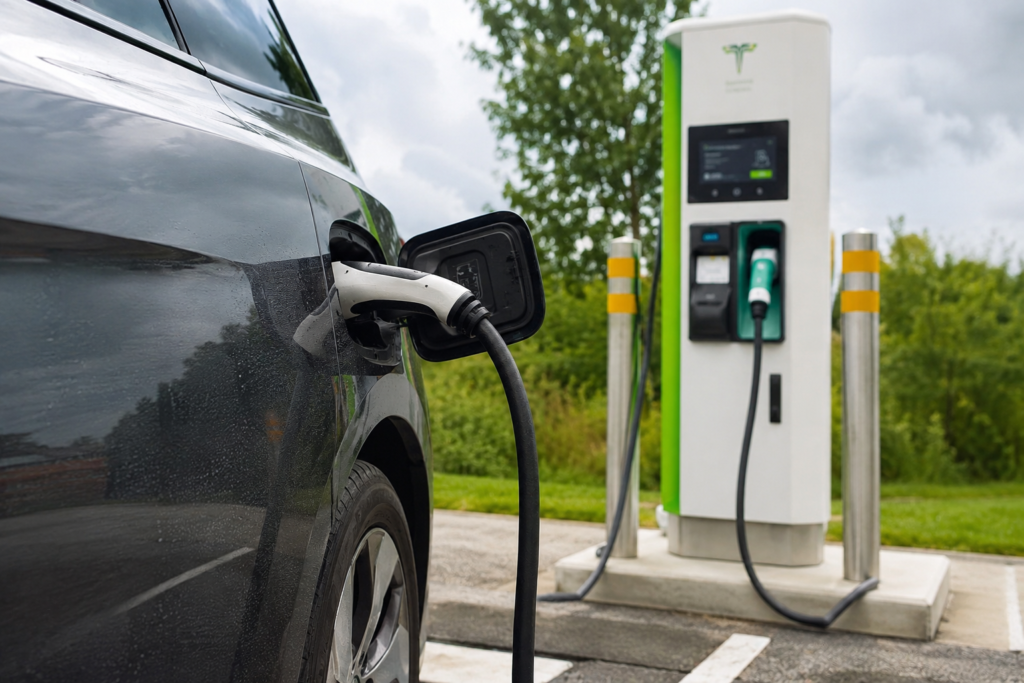
DC fast charging is designed for situations when drivers need to recharge an electric car quickly. These chargers are commonly found along highways, at shopping centers, service areas, and other busy locations.
Unlike slower home chargers, DC fast chargers can provide a large amount of energy in a short period. Some modern electric cars can gain a significant amount of driving range in about twenty to thirty minutes under suitable conditions.
However, the charging time can vary greatly. A vehicle with a larger battery may require more time than a smaller vehicle. The maximum charging rate supported by the car also matters.
Another important point is that DC fast charging is usually most useful for reaching a practical level of charge rather than charging from zero to one hundred percent. Charging speed often becomes slower as the battery approaches full capacity.
What Affects Electric Car Charging Time?
Several factors can affect how long it takes to charge an electric car. Knowing these factors can help drivers understand why charging times can be different even when using similar chargers.
Battery Size
Battery capacity is one of the most important factors. An electric car with a large battery generally needs more energy to reach a full charge than a vehicle with a smaller battery.
For example, a small electric car may have a battery designed mainly for city driving, while a larger electric SUV may have a much bigger battery for longer journeys. The larger battery can provide more driving range but may require more energy to fully recharge.
Charger Power
The power output of the charger also has a major effect on charging speed. A low power charger will take longer than a high power charger.
However, using a powerful charging station does not automatically mean every electric car will charge at the same speed. The vehicle has its own maximum charging capability, so the car may limit the amount of power it accepts.
Battery Percentage
The current battery level also affects charging time. When the battery is very low, the vehicle can often accept energy at a higher rate. As the battery becomes fuller, the charging system gradually reduces power.
This is why charging from twenty percent to eighty percent can be much faster than charging from eighty percent to one hundred percent.
Temperature
Battery temperature can also influence electric car charging time. Extremely cold or hot conditions may cause the vehicle to reduce charging power.
Modern electric cars often use battery temperature management systems to keep the battery within a suitable operating range. Some vehicles can also prepare the battery before arriving at a fast charging station, which can improve charging performance.
Vehicle Charging Technology
Different electric cars support different maximum charging speeds. Two vehicles connected to the same fast charger may therefore have different charging times.
Newer electric vehicles often include improved battery technology and charging systems that can accept more power. When comparing electric cars, it is useful to check both battery capacity and maximum charging speed.
How Long Does It Take to Charge an Electric Car at Home?
Home charging is one of the biggest advantages of owning an electric vehicle because drivers can recharge while sleeping or working from home.
With a standard household outlet, charging may take many hours or even more than a day depending on the battery size. A Level 2 home charger can reduce the charging time considerably and may provide enough energy for daily driving during an overnight period.
The best charging option depends on how far you normally drive. Someone who travels only a short distance each day may not need the fastest home charger. A driver who travels long distances regularly may benefit more from faster home charging equipment.
How Long Does Fast Charging Take?
Fast charging can be significantly quicker than home charging. Depending on the vehicle and charging station, drivers may add a substantial amount of range within twenty to forty minutes.
The actual time depends on several conditions, including the battery percentage, battery temperature, charger power, vehicle charging limit, and current power available at the station.
For road trips, fast charging can make electric cars much more practical. Drivers can stop for a short break, charge the vehicle, and continue their journey.
Is It Necessary to Charge an Electric Car to 100 Percent?
Many electric car drivers do not need to charge their vehicle to 100 percent every day. For regular daily driving, charging to a moderate level may be enough.
For longer trips, drivers may choose to charge closer to full capacity before leaving. However, charging from a high battery percentage to completely full can take longer because the charging speed normally decreases near the top of the battery.
Following the charging recommendations provided by the vehicle manufacturer is always a good idea. Different electric cars can have different battery management systems and charging recommendations.
How Can You Make Electric Car Charging Faster?
There are several ways to make charging more convenient. Installing a suitable Level 2 charger at home is one of the most useful improvements for regular EV drivers.
Planning charging stops before a long journey can also save time. Drivers can look for fast charging stations along their route and choose locations where they can take a break while the car charges.
Keeping the battery at a reasonable level can also reduce charging stress. Instead of waiting until the battery is almost empty, drivers can recharge when convenient.
It is also helpful to remember that charging an electric car is different from refueling a petrol car. Many drivers charge their vehicle while it is parked at home, at work, or while shopping. This means charging often happens without requiring a special trip to a fuel station.
Electric Car Charging Time Compared With Fueling
A traditional petrol car can usually be refueled in a few minutes. Electric car charging can take longer, especially when using slower charging equipment.
However, electric vehicles offer a different type of convenience. A petrol car normally requires a visit to a fuel station, while an electric car can often be charged at home overnight.
For many drivers, this means they rarely need to think about charging during normal daily use. Fast charging becomes more important during long road trips when the vehicle needs additional range quickly.
Conclusion
How long it takes to charge an electric car depends on several factors, including battery size, charger type, vehicle technology, battery percentage, and temperature. A standard household outlet can take many hours, while a Level 2 charger can provide a much faster home charging experience. DC fast charging can provide a significant amount of range in a relatively short period and is especially useful for long distance travel.
The good news is that electric car charging can easily become part of a normal daily routine. Many drivers simply plug in their vehicle when they get home and allow it to charge overnight. With the continued development of electric vehicle technology, charging speeds are also improving.
Before buying an electric car, it is important to consider your daily driving distance, home charging options, battery capacity, and access to public fast chargers. By understanding these factors, you can choose an electric vehicle that fits your lifestyle and enjoy the benefits of convenient and efficient electric transportation.