Related Articles


The future of transportation is changing quickly as people around the world look for cleaner, smarter, and more affordable ways to travel. Electric cars and electric bikes are becoming an important part of this change. Improvements in battery technology, charging systems, electric motors, and smart technology are making electric vehicles more practical for everyday use.
Electric cars are already becoming a popular choice for families, professionals, and businesses. At the same time, electric bikes are giving people a simple and convenient option for short distance travel. Both technologies are expected to grow in the coming years as manufacturers continue to improve performance and reduce costs.
The Growing Popularity of Electric Vehicles
Electric vehicles are becoming more common because they offer several advantages over traditional petrol and diesel vehicles. Electric cars produce no tailpipe emissions while driving, which can help reduce local air pollution. Electric bikes can also replace many short car trips, making them useful for reducing traffic and energy use.
Consumers are also becoming more interested in the long term cost of transportation. Electric vehicles generally have fewer moving mechanical parts than traditional vehicles, which can mean less routine maintenance. Electric motors are also highly efficient, allowing a large portion of stored battery energy to be converted into movement.
As technology improves, electric cars and electric bikes are expected to become easier to use for different types of journeys.
Better Battery Technology
Battery technology will play one of the biggest roles in the future of electric cars and electric bikes. Modern electric vehicles mainly use lithium ion batteries, but researchers and manufacturers are working on new battery designs that could provide greater energy density, faster charging, longer life, and improved safety.
Future batteries may allow electric cars to travel much farther on a single charge. This could reduce one of the main concerns people have about electric vehicles, which is driving range. Electric bikes may also benefit from lighter batteries that provide more distance without making the bicycle too heavy.
Solid state battery technology is another area receiving attention. These batteries have the potential to offer higher energy density and improved safety compared with some current battery designs. Although large scale adoption will depend on cost and manufacturing development, battery innovation could strongly influence the future of electric transportation.
Faster and More Convenient Charging
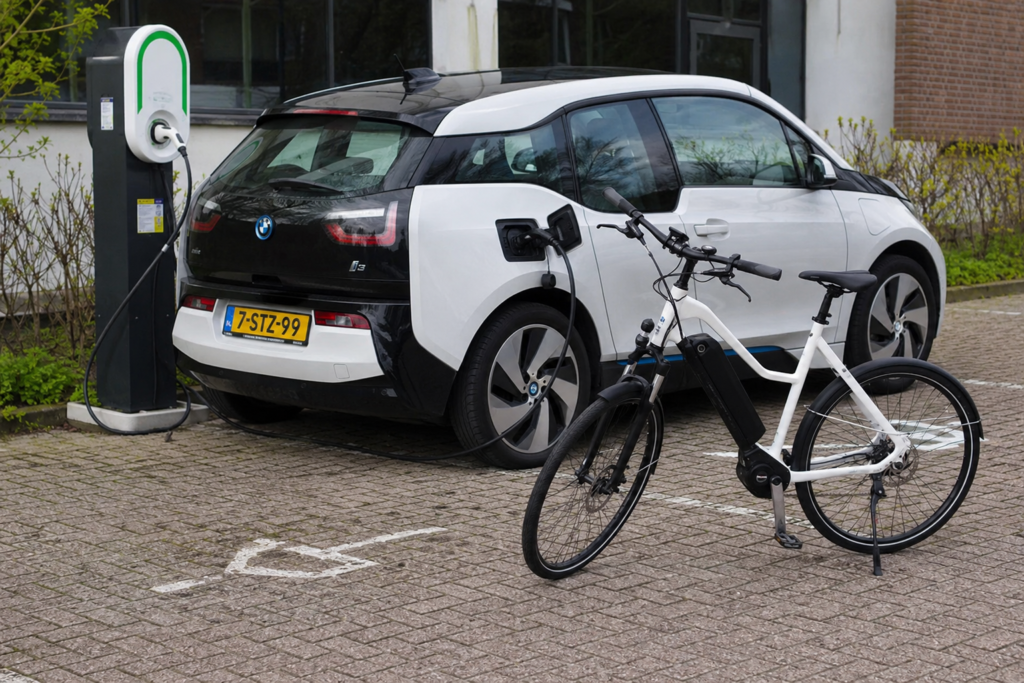
Charging is another important part of the future of electric cars and electric bikes. As more electric vehicles are introduced, charging infrastructure will need to grow with them.
Future electric cars are expected to support faster charging, allowing drivers to add a significant amount of range in a relatively short period. Public charging stations may become more common at shopping centers, workplaces, parking areas, highways, and other convenient locations.
Home charging will remain important as well. Many electric car owners will be able to charge their vehicles overnight while they are parked. Electric bike users may have an even easier experience because many bike batteries can be removed and charged indoors.
Wireless charging could also become more common in the future. Instead of connecting a cable manually, drivers may be able to park over a charging system that transfers electricity to the vehicle automatically.
Smarter Electric Cars
The future electric car will not only be about batteries and motors. Software and smart technology will become increasingly important.
Modern electric cars already include advanced screens, navigation systems, driver assistance features, smartphone connections, and software updates. Future vehicles may become even more connected and intelligent.
Artificial intelligence could help vehicles understand traffic conditions, improve energy efficiency, and provide better route planning. Navigation systems may automatically select routes that include charging stations when necessary.
Smart energy management could also help drivers use electricity more efficiently. A vehicle might recommend the best time to charge based on electricity prices, battery condition, travel plans, and available renewable energy.
The Future of Electric Bikes
Electric bikes are expected to play a major role in urban transportation. They are especially useful for short and medium distance journeys where using a large car may not be necessary.
An electric bike provides pedal assistance through an electric motor. This allows riders to travel farther and handle hills more easily than with a traditional bicycle. For many people, this makes cycling a more practical option for commuting.
Future electric bikes are likely to become lighter, more efficient, and more comfortable. Battery improvements may increase riding distance while reducing battery weight. Better motors could provide smoother assistance, while improved designs could make electric bikes easier to handle.
Electric bikes may also become more connected. GPS tracking, smartphone applications, digital displays, theft protection, and battery monitoring could become standard features on many models.
Electric Bikes and Urban Transportation
Cities around the world are dealing with traffic congestion, limited parking, and air pollution. Electric bikes can help address some of these problems because they require much less space than cars.
A person traveling a few kilometers to work may not need a full size car for the journey. An electric bike can provide transportation while using less road space and less energy.
As cities develop better cycling infrastructure, electric bikes could become even more attractive. Dedicated bike lanes, secure parking areas, charging points, and safer intersections can encourage more people to choose electric bicycles.
Electric bikes may also become important for delivery services. Businesses can use them for food delivery, local packages, and other short distance services. This can provide a practical alternative to larger vehicles in busy urban areas.
More Affordable Electric Vehicles
Price has been one of the biggest barriers to electric vehicle adoption. Electric cars can have higher purchase prices than some traditional vehicles, although running and maintenance costs may be lower in certain situations.
The future could bring more affordable electric cars as battery production increases and manufacturing becomes more efficient. Greater competition between manufacturers may also encourage companies to offer more models at different price points.
Electric bikes are already available across a wide range of prices. As demand grows, consumers may have more choices based on battery size, motor power, design, and features.
Affordable electric transportation could make it easier for more people to reduce their dependence on petrol and diesel vehicles.
Renewable Energy and Electric Transportation
The relationship between electric vehicles and renewable energy will become increasingly important. Electric cars and electric bikes need electricity, and the environmental benefits of electric transportation can become stronger when that electricity comes from cleaner sources.
Solar and wind power can help provide electricity for charging. Homes with solar panels may eventually use their own renewable electricity to charge electric vehicles.
Electric cars may also become part of the energy system. Vehicle to grid technology could allow compatible electric vehicles to send stored electricity back to the power grid when needed. This could turn parked electric cars into temporary energy storage systems.
Challenges Ahead
Despite the strong potential of electric cars and electric bikes, several challenges remain.
Battery production requires raw materials and significant industrial capacity. Recycling will therefore become increasingly important. Better battery recycling systems can help recover valuable materials and reduce waste.
Charging infrastructure also needs continued development. Rural areas and regions with limited electricity infrastructure may need additional investment.
Another challenge is consumer education. People need clear information about charging, battery life, maintenance, safety, and total ownership costs. As electric transportation becomes more common, understanding these topics will become easier.
Electric Cars and Electric Bikes Working Together
The future of transportation does not necessarily mean that everyone will replace a petrol car with an electric car. Instead, people may use different electric vehicles for different journeys.
An electric car can be useful for family trips, long distance travel, and carrying several passengers. An electric bike can be ideal for commuting, shopping, and short trips.
This combination can create a more flexible transportation system. A household might use an electric car for longer journeys while using electric bikes for daily trips around the local area.
What Consumers Can Expect
Over the next several years, consumers can expect more choices in electric cars and electric bikes. Manufacturers will continue developing vehicles with better range, improved charging, smarter technology, and more attractive designs.
Electric cars may become more efficient and easier to integrate with home energy systems. Electric bikes may become lighter and more practical for everyday commuting.
The overall experience of owning an electric vehicle is also likely to become simpler. Charging networks can become larger, software can become smarter, and maintenance systems can become more advanced.
Conclusion
The future of electric cars and electric bikes looks promising. Both technologies are changing the way people think about transportation and personal mobility.
Electric cars can provide an efficient alternative for longer journeys, while electric bikes can offer an affordable and convenient solution for shorter trips. Improvements in battery technology, charging infrastructure, renewable energy, and smart software are likely to make both options more useful in the years ahead.
The transition will not happen overnight, and challenges such as battery production, charging availability, cost, and infrastructure still need attention. However, continued innovation is making electric transportation more practical every year.
As technology develops, electric cars and electric bikes could become an important part of everyday life. Their future will depend not only on better vehicles but also on smarter cities, cleaner electricity, improved infrastructure, and consumers who are ready to explore new ways of traveling. The growth of electric transportation could ultimately create a cleaner, quieter, and more efficient future for people around the world.