Related Articles



The way people travel is changing quickly. For many years, petrol and diesel vehicles have been the main choice for daily transportation. However, growing fuel prices, traffic problems, air pollution, and concerns about climate change are encouraging people to look for cleaner alternatives. Electric cars and electric bikes are becoming popular because they offer a practical way to move from one place to another while reducing dependence on traditional fuels.
Electric cars and bikes are an important part of the future of green transportation. They use electric motors instead of traditional engines and can reduce harmful emissions during use. As battery technology continues to improve, electric vehicles are becoming more efficient, affordable, and convenient for everyday travel.
What Are Electric Cars and Electric Bikes?
Electric cars are vehicles powered mainly by electricity stored in rechargeable batteries. Instead of using petrol or diesel, an electric car uses an electric motor to move the vehicle. The battery can be charged at home, at public charging stations, or at other charging facilities.
Electric bikes, commonly called e bikes, use a rechargeable battery and electric motor to assist the rider. Some electric bikes can travel using motor assistance while the rider pedals, while others may provide stronger electric support depending on their design and local regulations.
Both electric cars and electric bikes are part of the growing electric transportation industry. They provide different solutions for different types of journeys. Electric cars are useful for families, longer trips, and daily commuting, while electric bikes are especially useful for short distance travel and crowded urban areas.
Why Green Transportation Is Important
Transportation is one of the major areas where people use energy every day. Traditional vehicles that burn petrol and diesel produce greenhouse gases and other pollutants. These emissions can contribute to poor air quality and environmental problems.
Green transportation focuses on reducing the environmental impact of travel. Electric cars and bikes can support this goal because they do not produce exhaust emissions while operating. Their overall environmental benefits also depend on how the electricity used for charging is produced.
As more countries increase their use of renewable energy such as solar and wind power, electric transportation can become even cleaner. This creates an opportunity to connect clean energy with clean mobility.
Benefits of Electric Cars
One of the biggest advantages of electric cars is lower dependence on petrol and diesel. Drivers can charge their vehicles using electricity instead of visiting fuel stations regularly. This can make daily transportation more convenient, especially for people who can charge their vehicles at home.
Electric cars can also have lower running and maintenance costs compared with traditional vehicles. Electric motors have fewer moving parts than internal combustion engines. Because of this, electric vehicles generally require less routine mechanical maintenance.
Another important benefit is the driving experience. Electric motors can deliver power quickly, which allows many electric cars to accelerate smoothly. They are also quieter than traditional petrol vehicles because there is no conventional engine producing the same level of mechanical noise.
Electric cars can be particularly useful for daily commuting. A person who drives a predictable distance every day may find home charging convenient and easy to manage.
Benefits of Electric Bikes
Electric bikes offer many of the advantages of electric cars while using much less energy and space. They are especially useful in cities where traffic congestion can make car journeys slow.
An electric bike can help people travel short and medium distances without relying completely on a car. The electric motor provides assistance, making hills and longer journeys easier for many riders.
Electric bikes are also generally easier to park than cars. They can be useful for commuting to work, visiting local shops, attending classes, or making short trips around a neighborhood.
Another advantage is that electric bikes can combine transportation with physical activity. Riders can pedal normally while receiving electric assistance when needed. This makes e bikes an attractive option for people who want a practical form of personal transportation.
Electric Cars and Bikes Can Reduce Transportation Costs
Transportation costs can take a significant part of a household budget. Fuel, maintenance, insurance, parking, and other expenses can make traditional car ownership expensive.
Electric cars may reduce some operating costs because electricity can cost less than petrol or diesel for the same distance, depending on local energy and fuel prices. Reduced maintenance requirements can also provide long term savings.
Electric bikes can offer even greater savings for short trips. They require less energy and usually have lower maintenance costs than cars. A person who replaces several short car journeys with an electric bike can potentially reduce fuel and parking expenses.
The exact savings depend on the vehicle, electricity prices, distance traveled, maintenance, and other local costs. However, the possibility of reducing daily transportation expenses is one reason electric mobility is attracting more consumers.
The Role of Battery Technology
Battery technology is one of the most important factors in the development of electric cars and bikes. Modern batteries are becoming more efficient and capable of storing more energy in a smaller and lighter package.
Better batteries can increase driving and riding range while reducing charging concerns. Battery improvements can also help manufacturers create vehicles that are more practical for everyday users.
Battery lifespan is another important consideration. Proper charging habits, temperature management, and regular use can help maintain battery performance. Manufacturers are also working on new battery technologies that could improve charging speed, energy storage, safety, and durability.
As research continues, batteries are expected to play an even bigger role in the future of green transportation.
Charging Infrastructure Is Growing
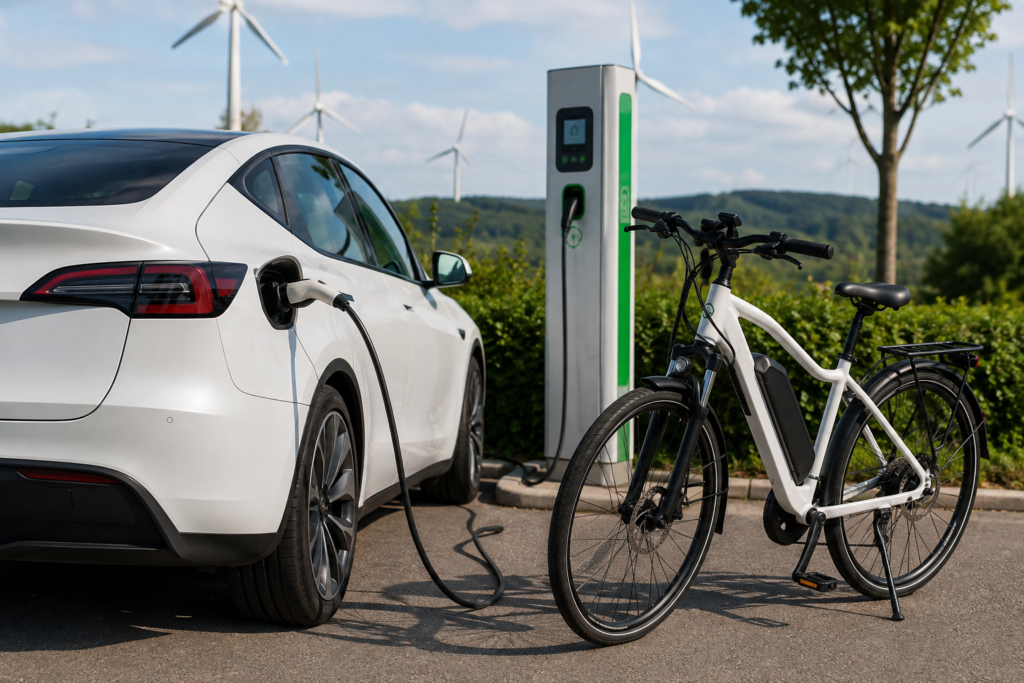
Charging infrastructure is essential for the success of electric transportation. Electric car owners need convenient places to recharge their vehicles, while electric bike users may need accessible charging options at homes, workplaces, shops, and public locations.
Home charging is one of the biggest advantages for electric car owners who have suitable parking facilities. Instead of visiting a fuel station, drivers can charge their vehicle while it is parked.
Public charging networks are also expanding in many regions. Faster charging stations can make longer electric car journeys more practical. For electric bikes, removable batteries can provide additional convenience because riders can sometimes take the battery indoors for charging.
Better charging infrastructure will help increase confidence among people who are considering switching to electric transportation.
Challenges Facing Electric Transportation
Although electric cars and bikes have many advantages, they also have challenges. The initial purchase price of some electric vehicles can be higher than traditional alternatives. Battery replacement can also be expensive depending on the vehicle and battery design.
Charging access can be difficult for people who live in apartments or areas without private parking. Long distance travel can also require careful planning when charging stations are limited.
Electric bikes have their own challenges. Battery range can vary depending on rider weight, road conditions, speed, weather, and how much motor assistance is used. Some riders may also be concerned about theft and the need for secure parking.
Despite these challenges, continued investment and technological improvements are helping make electric vehicles more practical.
The Future of Green Transportation
The future of transportation is likely to include a combination of electric cars, electric bikes, public transportation, walking, and other sustainable travel options. There will not be one solution for every journey.
Electric cars can be useful for families and longer distances, while electric bikes can provide an efficient solution for short urban trips. Public transportation can move large numbers of people efficiently, reducing the need for individual vehicles.
Smart cities may also use technology to connect different forms of transportation. Charging stations, bicycle lanes, traffic management systems, and public transport networks can work together to create cleaner and more convenient urban mobility.
Governments and businesses can support this transition by improving charging infrastructure, encouraging renewable energy, developing safe cycling infrastructure, and creating policies that make cleaner transportation more accessible.
Conclusion
Electric cars and bikes are becoming an important part of the future of green transportation. They offer cleaner alternatives to traditional vehicles and can provide benefits such as lower operating costs, reduced dependence on fossil fuels, quieter travel, and greater efficiency.
Electric cars are suitable for many daily and long distance journeys, while electric bikes provide an affordable and convenient option for short distance travel. Both technologies still face challenges related to cost, charging infrastructure, battery technology, and accessibility, but continued innovation is making electric transportation more practical.
As battery technology improves and renewable energy becomes more widely available, electric cars and bikes could play an even greater role in creating cleaner communities. The future of transportation will likely depend on choosing the right travel option for each journey, and electric mobility will be an important part of that future.
For people looking for a cleaner, smarter, and potentially more economical way to travel, electric cars and electric bikes provide promising choices. The growth of electric transportation is not simply a trend. It represents a major change in how people think about mobility and the future of green transportation.