Related Articles
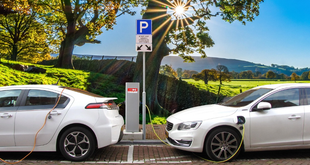
Electric cars are becoming more popular because they offer lower running costs, smooth driving, and a cleaner alternative to traditional petrol and diesel vehicles. As more people switch to electric vehicles, charging has become an important part of everyday driving. One of the most common questions for new electric car owners is the difference between fast charging and normal charging.
Fast charging vs normal charging is not simply about which method is better. Both charging options have different benefits, costs, and practical uses. Normal charging is often suitable for overnight charging at home, while fast charging can be useful when you need to add a large amount of battery power in a short period of time.
Understanding how both systems work can help electric car owners choose the right charging method for different situations.
What Is Normal Charging for Electric Cars?
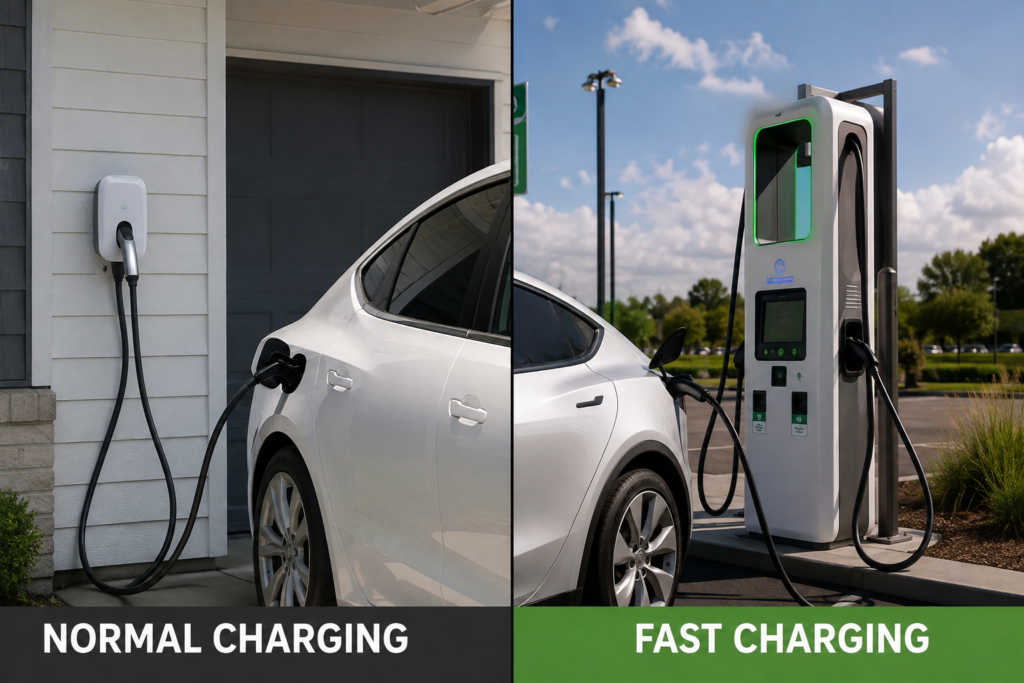
Normal charging usually refers to slower AC charging that is commonly used at home or at workplaces. Many electric car owners connect their vehicles to a home charging station in the evening and allow the battery to charge for several hours.
The exact charging speed depends on the vehicle, charger, electrical connection, and battery size. A normal home charger can provide enough energy during several hours of charging to cover the daily driving needs of many people.
One of the biggest advantages of normal charging is convenience. Instead of visiting a public charging station regularly, drivers can charge their electric car while it is parked at home. This can make daily electric car ownership simple and comfortable.
Normal charging is also generally easier on the household budget because home electricity can be less expensive than some public fast charging services.
What Is Fast Charging for Electric Cars?
Fast charging is designed to provide a much larger amount of electricity in a shorter period. These chargers are commonly found at public charging stations, highways, shopping areas, and major travel routes.
Unlike normal AC charging, many fast chargers use direct current to deliver energy to the battery more quickly. The actual charging speed depends on the electric car, battery temperature, battery condition, charger capacity, and the amount of power the vehicle can accept.
Fast charging can be especially useful during long trips. Instead of waiting several hours, a driver may be able to add a significant amount of driving range during a relatively short stop.
However, fast charging does not always maintain its maximum speed from the beginning to the end of a charging session. Electric vehicles normally reduce charging power as the battery becomes more full. This helps manage battery temperature and protect the battery.
Fast Charging vs Normal Charging Speed
The biggest difference between fast charging and normal charging is charging speed.
Normal charging is designed for situations where the vehicle can remain connected for a long time. For example, a driver may arrive home in the evening, connect the car to a charger, and leave it charging overnight.
Fast charging is designed for situations where time is more important. A driver traveling between cities may stop at a public charging station and recharge the vehicle before continuing the journey.
Charging speed can vary greatly between electric car models. Some vehicles accept much higher charging power than others. Because of this, buying a powerful charger does not automatically mean every electric car will charge at the same speed.
The battery management system of the vehicle controls how much energy the battery can safely receive.
Which Charging Method Is Better for Daily Driving?
For everyday driving, normal charging is often the more practical choice. Most people do not completely empty their electric car battery every day. If a vehicle is driven a moderate distance and then parked for several hours, there is usually enough time to recharge it.
Home charging also allows drivers to start each day with a useful amount of battery power without making a special trip to a public charging station.
Fast charging can still be useful for daily drivers who do not have access to home charging. People living in apartments or buildings without private parking may depend more heavily on public charging stations.
In this situation, fast charging can provide flexibility and reduce the amount of time spent waiting for the vehicle to recharge.
Fast Charging During Long Trips
Fast charging becomes particularly valuable during road trips. When traveling long distances, drivers need to recharge their vehicles at convenient locations.
A fast charging station can make long distance electric car travel easier because the driver does not need to wait for a full charge. In many cases, charging only enough energy for the next part of the journey is more efficient than waiting until the battery reaches a very high percentage.
Planning is still important. Drivers should consider the location of charging stations, expected traffic, weather conditions, vehicle range, and charging availability.
A well planned charging stop can also give passengers time to rest, eat, or use other facilities while the vehicle charges.
Effect of Fast Charging on Battery Life
Many electric car owners wonder whether fast charging damages an electric car battery. Modern electric vehicles are designed with battery management systems that control charging temperature and power.
Frequent high power charging can create more heat and may place greater stress on the battery compared with slower charging. However, this does not mean that fast charging should be avoided completely.
Battery technology has improved significantly, and manufacturers design their vehicles to manage fast charging safely.
For regular daily use, slower charging can be a good choice when time is not a concern. Fast charging can then be reserved for long trips, emergencies, or situations where quick charging is important.
Drivers should also follow the charging recommendations provided by their vehicle manufacturer.
Charging Cost Comparison
The cost of charging an electric car depends on several factors. These include electricity prices, charger type, charging network, vehicle efficiency, battery size, and location.
Home normal charging can be economical because drivers may be able to use household electricity during lower cost periods. Some electricity providers also offer special rates for charging electric vehicles at certain times.
Public fast charging can cost more per unit of energy. This is partly because fast charging stations require expensive equipment, maintenance, land, networking, and high power infrastructure.
For this reason, many electric car owners use home charging as their main charging method and public fast charging as a backup or travel solution.
Convenience of Normal Charging
Normal charging offers an important benefit that is sometimes overlooked: the vehicle can charge while the owner is doing something else.
At home, a driver can plug in the car after returning from work and continue with their evening routine. There is no need to sit beside the vehicle and wait for the battery to charge.
This makes normal charging particularly attractive for people with predictable daily schedules.
For many electric car owners, the best charging experience is not necessarily the fastest one. It is the one that fits naturally into their lifestyle.
Convenience of Fast Charging
Fast charging offers a different type of convenience. It saves time when a driver needs additional range quickly.
Imagine a driver traveling several hundred kilometers. Waiting overnight to recharge would not be practical. A fast charging station allows the driver to continue the journey after a relatively short stop.
Fast charging is also useful when unexpected travel is required. If the battery is low and the driver needs to leave soon, fast charging can provide additional range much faster than normal charging.
Impact of Weather on Charging
Temperature can affect electric car charging performance. Very cold or very hot conditions can change battery behavior and influence charging speed.
Many modern electric cars use thermal management systems to keep the battery within a suitable temperature range. Some vehicles can prepare the battery before arriving at a fast charging station.
Drivers may notice that charging takes longer in extreme weather. This is normal and does not necessarily indicate a problem with the vehicle.
Understanding this can help electric car owners plan charging stops more effectively.
Can You Use Both Charging Methods?
Yes, electric car owners can use both normal charging and fast charging. In fact, using both methods is often the most practical approach.
Normal charging can be used for regular overnight charging, while fast charging can be used during long journeys or when there is limited time.
This flexible approach allows drivers to enjoy the lower cost and convenience of home charging while still having access to rapid public charging when needed.
The best charging strategy depends on driving habits, home parking arrangements, electricity costs, vehicle range, and access to public charging stations.
Fast Charging vs Normal Charging: Which One Should You Choose?
There is no single answer for every electric car owner.
Normal charging is usually better when you have several hours available, especially overnight. It is convenient, practical, and can be economical for regular use.
Fast charging is better when you need to add range quickly. It is especially useful for road trips, busy schedules, emergencies, and drivers without convenient access to home charging.
Instead of choosing only one method, electric car owners can use normal charging as their everyday option and fast charging when speed matters.
Final Thoughts
Fast charging vs normal charging for electric cars is mainly a comparison between speed and convenience. Normal charging works well for daily routines because the vehicle can charge while it is parked for several hours. Fast charging is valuable when drivers need more energy in a shorter amount of time.
Both charging methods are important to the growth of electric vehicles. As charging networks improve and battery technology continues to develop, electric car charging is becoming easier and more convenient.
For most drivers, a balanced approach makes the most sense. Use normal charging whenever there is enough time and rely on fast charging when a quick recharge is necessary. By understanding the strengths of both methods, electric car owners can reduce charging stress, plan trips more effectively, and get more value from their electric vehicles.