Related Articles


Charging an electric bike battery properly is one of the most important habits for keeping an electric bike safe, reliable, and ready for daily use. A good charging routine can help maintain battery performance, support a longer battery life, and reduce the chances of charging related problems. Whether you are new to electric bikes or have been using one for years, understanding how to charge an electric bike battery correctly can make a big difference.
Electric bike batteries are designed to be convenient, but they still need proper care. Many riders simply connect the charger whenever the battery becomes low without thinking about temperature, charging location, charger quality, or storage. These small details can affect battery health over time. The good news is that charging an electric bike battery is generally simple when you follow a few basic rules.
Understand Your Electric Bike Battery
Before learning how to charge an electric bike battery properly, it is useful to understand what type of battery your electric bike uses. Most modern electric bikes use lithium ion batteries because they are lightweight, powerful, and capable of storing a large amount of energy.
Every battery has specific charging requirements. The voltage, charger type, charging time, and recommended charging method can vary between electric bike models. This is why you should always check the manufacturers instructions before using a charger.
Never assume that a charger from another electric bike will work safely with your battery. Even if the connector looks similar, the electrical specifications may be different.
Use the Correct Charger
Using the correct charger is one of the most important rules for electric bike battery charging. Ideally, use the charger supplied by the electric bike manufacturer or a charger that is specifically approved for your battery.
A compatible charger is designed to provide the correct voltage and current. Using an unsuitable charger may cause poor charging performance and could damage the battery or create a safety risk.
Check the label on your charger and compare its specifications with the requirements listed in your electric bike manual. If your original charger is lost or damaged, purchase a suitable replacement from the manufacturer or a trusted supplier.
Choose a Safe Charging Location
Where you charge your electric bike battery is also important. Always charge the battery in a clean, dry, and well ventilated area. Keep it away from rain, water, direct sunlight, heaters, stoves, and other sources of extreme heat.
Avoid charging an electric bike battery in a place where it can easily be knocked over or damaged. Keep the charging area free from unnecessary objects and make sure children and pets cannot interfere with the charger.
A stable indoor location is usually a good choice when the manufacturer allows indoor charging. The battery and charger should have enough space around them for proper airflow.
Check the Battery Before Charging
Before connecting the charger, take a few seconds to inspect the battery. Look for visible damage, unusual swelling, cracks, leaks, or signs of overheating. Also check the charging connector and cable for damage.
If the battery has been dropped, exposed to water, or appears damaged, do not immediately connect it to a charger. Contact the electric bike manufacturer or a qualified technician for advice.
This simple inspection can help identify problems before they become more serious.
Let a Hot or Cold Battery Reach a Normal Temperature
Battery temperature can affect charging performance. If you have just returned from a long ride and the battery feels very hot, allow it to cool down before charging if the manufacturer recommends doing so.
Similarly, if the electric bike battery has been stored in extremely cold conditions, allow it to return to a suitable temperature before charging.
Do not use artificial heat such as a heater or hair dryer to warm the battery. Extreme temperatures can affect lithium ion battery performance and safety.
Connect the Charger Correctly
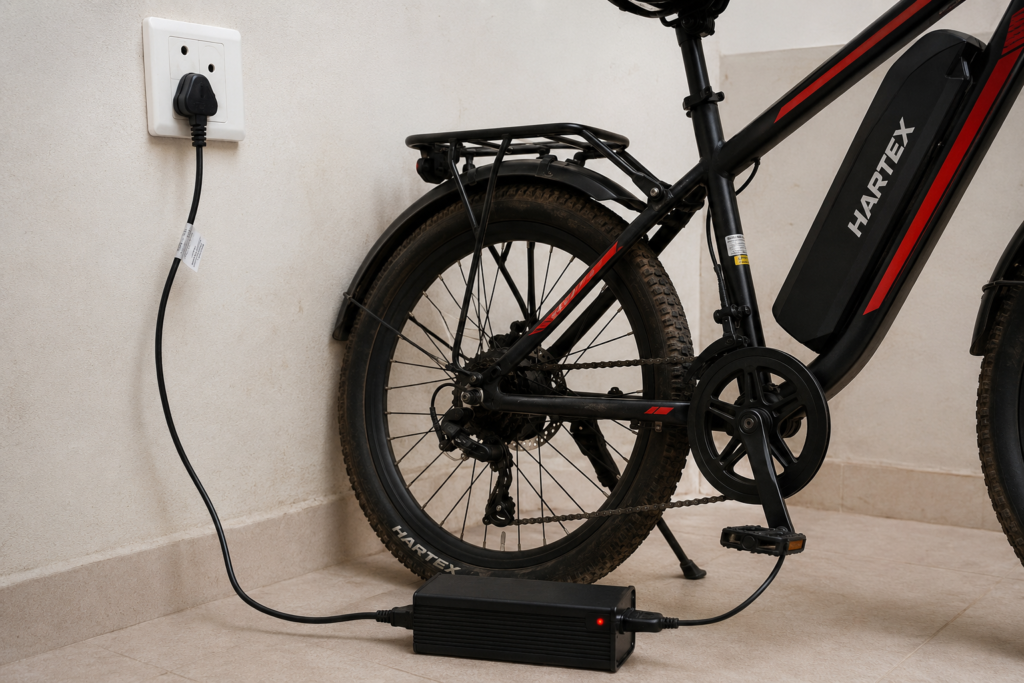
Once the battery is ready, connect the charger according to the instructions provided with your electric bike. Make sure the charging connector is properly aligned and inserted without forcing it.
Some electric bikes allow you to charge the battery while it is installed on the bike. Others allow the battery to be removed and charged separately. Follow the charging method recommended by the manufacturer.
After connecting the charger, check the indicator light or display to confirm that charging has started. If the charger does not appear to be working normally, disconnect it and check the connections.
How Long Should You Charge an Electric Bike Battery?
The charging time for an electric bike battery depends on its capacity, charger output, and battery condition. Many batteries take several hours to reach a full charge.
Do not rely on a fixed charging time for every electric bike. Instead, follow the charging indicator and the manufacturers instructions.
Modern battery systems generally include charging controls that help manage the process. Once the battery reaches its intended charge level, the system can reduce or stop the charging current. Even so, it is a good habit to avoid leaving the battery connected to a charger for unnecessarily long periods.
Should You Charge an Electric Bike Battery to 100 Percent?
Charging to 100 percent is not always necessary for everyday riding. If you need maximum range for a long trip, a full charge can be useful. For shorter daily rides, you may not need to charge the battery completely every time.
Lithium ion batteries generally work well with regular partial charging. You do not need to wait until the battery is completely empty before charging it.
Keeping the battery within a comfortable charge range for normal use can be a practical approach, while following the specific recommendations provided by the manufacturer.
Avoid Completely Draining the Battery
One common mistake is repeatedly using an electric bike until the battery reaches zero percent. While the battery management system is designed to protect the battery from excessive discharge, regularly running the battery extremely low is not ideal.
Try to recharge the battery before it becomes completely depleted, especially when you still have a long journey ahead. Planning your charging around your expected riding distance can make electric bike use much easier.
If your battery becomes very low during a ride, reduce unnecessary power consumption where possible and find a safe place to recharge.
Do Not Charge a Damaged Battery
Never ignore signs of battery damage. If an electric bike battery becomes swollen, unusually hot, damaged, or starts producing an unusual smell or sound, stop using it and keep it away from flammable materials.
Do not attempt to open or repair a lithium ion battery yourself. Battery packs contain electrical components that require specialized knowledge and equipment.
If you notice a serious problem, contact the manufacturer or a qualified electric bike technician.
Keep the Charging Cable in Good Condition
The charger cable is an important part of the charging system. Avoid bending, twisting, crushing, or pulling the cable unnecessarily.
Store the charger in a dry place when it is not being used. Check the cable and plug regularly for cuts, exposed wires, loose connections, or other signs of damage.
A damaged charger should be replaced rather than repaired with temporary solutions such as tape.
Charging an Electric Bike Battery Overnight
Many electric bike riders prefer charging overnight because the battery is ready for the next morning. However, it is best to follow the manufacturers instructions about unattended charging.
If overnight charging is permitted, use the original or approved charger and place the battery in a suitable location with good ventilation. Avoid covering the charger or battery with blankets, clothing, or other materials that could restrict airflow.
For additional peace of mind, many riders prefer charging while they are awake and able to check the battery periodically.
Proper Battery Storage
Charging habits are only one part of electric bike battery care. Proper storage also matters.
If you will not use your electric bike for an extended period, avoid storing the battery completely empty. Follow the manufacturers recommended storage charge level and keep the battery in a cool, dry environment away from extreme temperatures.
Check the battery periodically during long storage periods and recharge it according to the manufacturers instructions.
Tips for Better Electric Bike Battery Life
A few simple habits can help support long term battery performance.
Charge your electric bike battery with the correct charger. Keep the battery away from extreme heat and cold. Avoid completely draining the battery whenever possible. Keep the charging port clean and dry. Inspect the battery and charger regularly. Store the battery correctly when the electric bike is not being used for a long time.
You should also avoid unnecessary high temperature exposure. Parking an electric bike in direct sunlight for many hours can raise battery temperature significantly, especially during hot weather.
Final Thoughts
Learning how to charge an electric bike battery properly is simple, but following the right habits can help protect your investment. Always use the correct charger, charge the battery in a safe and dry location, inspect it before charging, and follow the instructions provided by the manufacturer.
You do not need to completely drain the battery before charging it, and regular partial charging can be convenient for everyday riding. Avoid extreme temperatures, damaged charging equipment, and unsafe charging environments.
With proper electric bike battery charging habits, your battery can remain dependable for daily commuting, weekend rides, and longer journeys. Taking a few minutes to charge and store the battery correctly can help you enjoy better performance and a more reliable electric bike experience over time.