Related Articles

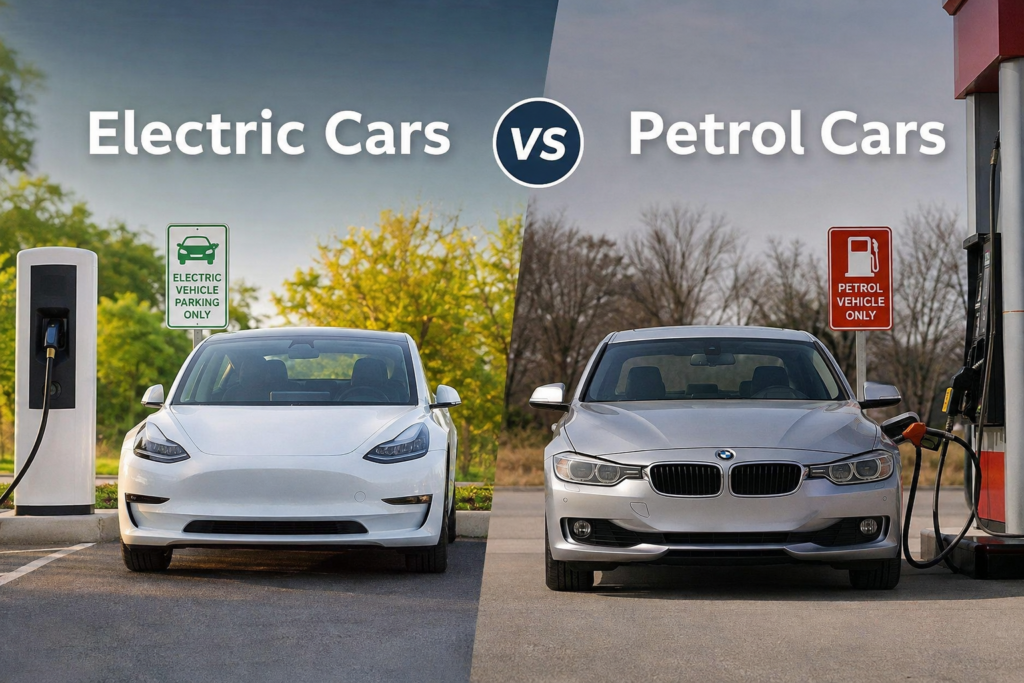
The debate between electric cars and petrol cars has become more important as people look for affordable, reliable, and environmentally friendly ways to travel. Petrol cars have been used for more than a century and remain popular around the world. Electric cars, however, are becoming a strong alternative because of improvements in battery technology, charging systems, driving range, and vehicle performance.
Choosing between an electric car and a petrol car depends on several factors. Price, fuel cost, maintenance, driving range, performance, environmental impact, and charging convenience can all affect the decision. In this article, we will compare electric cars vs petrol cars and explain which option may be better for different types of drivers.
What Is an Electric Car
An electric car is a vehicle powered mainly by electricity stored in a rechargeable battery. Instead of using a traditional petrol engine, an electric vehicle uses an electric motor to turn the wheels. The battery can be charged at home, at workplaces, or at public charging stations.
Electric cars have fewer moving mechanical parts than traditional vehicles. This can make their power systems simpler and can reduce some maintenance requirements. Many electric cars also provide quick acceleration because electric motors can deliver strong torque almost immediately.
What Is a Petrol Car
A petrol car uses an internal combustion engine that burns petrol to produce energy. The engine sends power through a transmission and other mechanical components to move the vehicle. Petrol cars can be refueled quickly at fuel stations, making them convenient for long distance journeys.
Petrol vehicles are available in many sizes and price ranges. They are supported by a large network of fuel stations and repair workshops. Because petrol cars have been common for many years, most drivers are already familiar with how they operate and maintain them.
Purchase Price Comparison
One of the first things buyers consider is the purchase price. Electric cars can sometimes have a higher initial price than similar petrol cars because batteries are expensive to manufacture. However, prices vary greatly depending on the brand, model, battery size, and local market.
Petrol cars are available at many different price points, including very affordable models. For buyers with a limited budget, a petrol car may be easier to purchase initially.
However, the purchase price is only one part of the total cost of owning a vehicle. Electricity, petrol, maintenance, insurance, taxes, and other expenses should also be considered.
Fuel and Charging Costs
Electric cars can have an advantage when it comes to energy costs. Charging an electric car at home can be convenient and may cost less per kilometer than buying petrol, depending on local electricity and fuel prices.
Petrol cars require regular visits to fuel stations. Petrol prices can change frequently, which makes fuel expenses difficult to predict. Drivers who travel long distances every day may spend a significant amount of money on petrol over time.
For people who have access to affordable home charging, an electric car can provide an attractive way to reduce daily driving costs.
Maintenance and Repair
Maintenance is another important difference between electric cars and petrol cars. Petrol engines contain many components that require regular servicing. Engine oil, oil filters, spark plugs, belts, exhaust components, and other parts may need attention during the life of the vehicle.
Electric cars generally have fewer moving parts in their electric drive systems. They do not require traditional engine oil changes, and some common engine related maintenance tasks are eliminated.
However, electric cars are not maintenance free. Tires, brakes, suspension components, cooling systems, battery systems, and other parts still require inspection and servicing. Battery repair or replacement can also be expensive if a major problem occurs.
Driving Range
Driving range is an important consideration when comparing electric cars vs petrol cars. Petrol cars can usually travel long distances without needing frequent stops because fuel stations are widely available.
Modern electric cars have improved significantly in terms of driving range. Many models can cover a substantial distance on one full charge. However, range can change depending on driving speed, weather, traffic, road conditions, battery size, and use of heating or air conditioning.
For daily city driving, an electric car can be very practical. For frequent long distance travel in areas with limited charging infrastructure, a petrol car may still be more convenient.
Charging Time vs Refueling Time
A major advantage of petrol cars is fast refueling. A driver can normally fill the fuel tank within a few minutes and continue the journey.
Electric cars require more time to recharge. Charging speed depends on the vehicle, charger, battery condition, and charging station. Fast chargers can provide significant range in a relatively short period, while home charging is usually slower.
For many electric car owners, charging overnight at home solves much of this problem. Instead of visiting a fuel station, they can start the day with a charged battery.
Performance and Driving Experience
Electric cars can provide a smooth and quiet driving experience. Electric motors can deliver power quickly, which gives many electric vehicles strong acceleration. The absence of traditional engine noise also makes electric cars quieter.
Petrol cars can offer a different driving experience. Some drivers enjoy the sound and feel of a petrol engine and the familiar operation of a conventional transmission.
Both types of vehicles can provide excellent performance. The better choice depends on personal preference and the type of driving experience a person wants.
Environmental Impact
Environmental impact is one of the biggest reasons people consider electric cars. Electric vehicles do not produce exhaust emissions while driving, which can help reduce local air pollution.
Petrol cars produce carbon dioxide and other emissions because they burn fossil fuels. These emissions contribute to air pollution and climate change.
Electric cars are not completely free from environmental impact. Battery production requires raw materials, energy, and industrial processes. The environmental benefits of an electric car also depend partly on how the electricity used for charging is generated.
Even with these considerations, electric cars can offer important environmental advantages, especially when they are charged using cleaner sources of electricity.
Reliability
Electric vehicles have fewer mechanical components than petrol vehicles, which can reduce the number of parts that can experience traditional engine related failures. Electric motors can also operate efficiently for long periods.
Petrol cars have mature technology and a large network of mechanics and repair shops. Their systems are well understood, and replacement parts are generally easy to find.
The reliability of both electric and petrol cars depends heavily on the specific model, manufacturer, driving conditions, and maintenance habits.
Which Car Is Better for City Driving
For city drivers, an electric car can be an excellent choice. City driving often involves frequent stopping and starting, and electric motors can work efficiently in these conditions. Regenerative braking can also recover some energy when the vehicle slows down.
An electric car can be especially convenient for someone who can charge at home and mainly uses the vehicle for commuting, shopping, and short daily trips.
A petrol car is also practical for city driving, particularly for people who do not have reliable access to charging facilities.
Which Car Is Better for Long Distance Travel
Petrol cars still have a strong advantage for many long distance journeys because refueling is quick and fuel stations are widely available.
Electric cars are becoming more practical for road trips as charging networks expand and vehicles receive longer ranges. However, drivers need to plan charging stops more carefully.
If a person frequently travels through areas with limited charging stations, a petrol car may provide greater convenience. If reliable fast charging is available along the route, an electric car can also be a good option.
Electric Cars vs Petrol Cars: Which Is Better
There is no single answer that works for every driver. An electric car may be better for someone who wants lower daily energy costs, quiet driving, reduced routine maintenance, and lower driving emissions.
A petrol car may be better for someone who wants a lower initial purchase price, quick refueling, easy access to fuel stations, and strong convenience for long distance travel.
The best choice depends on your budget, driving habits, access to charging, travel distance, and personal priorities.
Final Thoughts
The comparison between electric cars vs petrol cars shows that both have advantages and disadvantages. Petrol cars remain practical because of their established infrastructure, quick refueling, and wide availability. Electric cars are becoming increasingly attractive because of their efficient electric motors, lower routine maintenance needs, quiet operation, and potential environmental benefits.
Before buying a vehicle, consider how many kilometers you drive each day, where you can charge or refuel, the total ownership cost, and how long you plan to keep the car. For many daily commuters, an electric car can be a smart long term choice. For drivers who frequently travel long distances or lack convenient charging access, a petrol car may still be the more practical option.
Ultimately, the better car is the one that matches your lifestyle, budget, and driving needs. As electric vehicle technology and charging infrastructure continue to improve, the choice between electric cars and petrol cars will become even more competitive.