Related Articles

Electric cars are becoming more common on roads around the world. Many people are interested in electric vehicles because they can reduce fuel use, produce fewer direct emissions, and offer a different driving experience from traditional petrol and diesel cars. However, one common question remains: what are the main parts of an electric car, and how do they work together?
An electric car may look similar to a normal car from the outside, but its internal system is quite different. Instead of using a petrol or diesel engine as the main source of power, an electric car uses a battery, electric motor, electronic controls, and several other important components.
Understanding the main parts of an electric car can make electric vehicle technology much easier to understand. Whether you are thinking about buying an electric car or simply want to learn how electric vehicles work, knowing these components is a useful starting point.
1. Electric Car Battery
The battery is one of the most important parts of an electric car. It stores the electrical energy needed to move the vehicle.
Most modern electric cars use lithium ion batteries because they can store a large amount of energy while remaining relatively compact. The battery is made up of many smaller cells. These cells are connected together to create modules, and the modules are combined into a larger battery pack.
The battery pack is usually located under the floor of the vehicle. This position helps save space and keeps the vehicle’s center of gravity low. A lower center of gravity can also help improve stability and handling.
The capacity of an electric car battery is usually measured in kilowatt hours, or kWh. A larger battery can generally store more energy and may provide a longer driving range.
Battery size is not the only factor that determines range. Driving speed, weather, road conditions, vehicle weight, tire pressure, and heating or cooling systems can also affect how far an electric car can travel.
2. Electric Motor
The electric motor converts electrical energy from the battery into mechanical energy that turns the wheels.
This is the component that actually provides the driving force. When the driver presses the accelerator, electrical energy is sent from the battery through the vehicle’s electronic control system to the motor.
Electric motors have several advantages over traditional internal combustion engines. They can provide strong torque almost immediately, which means an electric car can respond quickly when accelerating.
Some electric cars use one motor, while others use two or more motors. A vehicle with two motors may have one motor driving the front wheels and another driving the rear wheels. This arrangement can provide all wheel drive and improved traction.
Different electric vehicles use different types of motors, but the basic purpose remains the same. The motor receives electrical energy and turns it into movement.
3. Inverter
The inverter is another important part of an electric car. It manages the electrical power moving between the battery and the electric motor.
The battery stores electricity as direct current. Many electric motors use alternating current during operation. The inverter converts the electrical current into the form required by the motor.
The inverter also controls how much electrical power reaches the motor. When the driver wants more acceleration, the system can provide more power. When less power is required, the system reduces the amount of energy supplied.
During regenerative braking, the process works in the opposite direction. The motor can act as a generator and send electrical energy back toward the battery. The inverter helps manage this energy flow.
Because the inverter controls a major part of the vehicle’s electrical system, it is essential for efficient electric car operation.
4. Charging Port
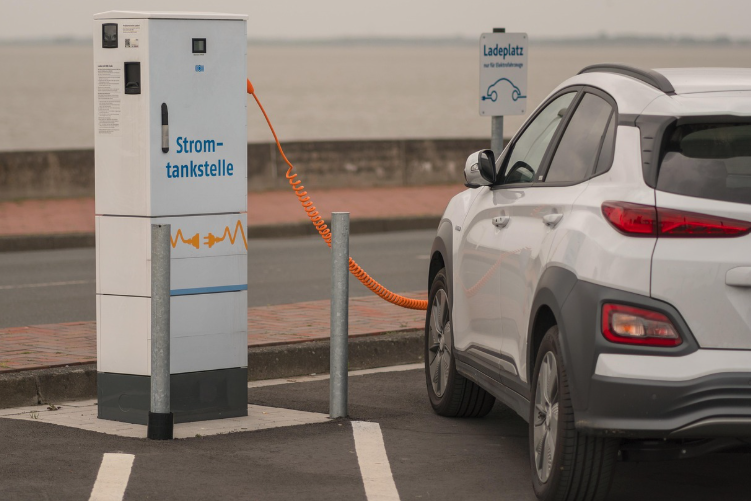
The charging port is the connection point used to transfer electricity from an external charging station or home charger into the electric car.
When you plug an electric car into a charger, electricity passes through the charging port and enters the vehicle’s charging system.
The exact design of the charging port depends on the vehicle and the country where it is sold. Different charging standards are used in different markets.
The charging port may also include communication systems that allow the car and charger to exchange information. For example, the vehicle can communicate how much power it can safely accept.
Some electric cars also have charging port lights or indicators that show whether the vehicle is charging, fully charged, or experiencing a charging problem.
5. Onboard Charger
The onboard charger manages electricity received from an AC charging source.
When an electric car is connected to a typical home AC charger, the electricity must be converted into a form that the battery can store. The onboard charger performs this conversion.
It also controls the charging process to help protect the battery. The charging system monitors factors such as voltage, current, and battery condition.
It is important to understand that an onboard charger is mainly involved with AC charging. DC fast charging works differently because the electricity can be supplied to the battery through a charging system that bypasses the vehicle’s normal onboard AC conversion process.
The power rating of the onboard charger can affect how quickly an electric car charges from an AC source.
6. Battery Management System
The Battery Management System, commonly called the BMS, is responsible for monitoring and managing the battery.
An electric car battery contains many individual cells, so the vehicle needs an electronic system to monitor them. The BMS checks important information such as voltage, temperature, and charge level.
The system helps keep the battery operating within safe limits. It can also help balance the cells so that they operate more evenly.
The BMS plays an important role in battery protection. If the system detects an abnormal condition, it can reduce charging or power output to protect the battery and other components.
The BMS also helps estimate the battery’s state of charge. This information is used by the vehicle to display an estimated remaining battery percentage to the driver.
7. Reduction Gearbox
Electric cars do not normally need the same multi speed transmission found in many petrol and diesel vehicles.
Most electric cars use a simple reduction gearbox. Its job is to transfer the motor’s rotation to the wheels while reducing the motor’s high rotational speed to a suitable speed for the wheels.
Electric motors can produce useful torque across a wide range of speeds. Because of this, a complicated transmission is often unnecessary.
The reduction gearbox is usually smaller and simpler than a conventional transmission. This contributes to the relatively simple mechanical design of many electric cars.
8. Thermal Management System
Keeping the battery, motor, inverter, and other components at suitable temperatures is extremely important.
Electric cars therefore have thermal management systems designed to control heat.
The battery can produce heat during charging and driving. If the battery becomes too hot, performance and long term battery health can be affected. Extremely cold temperatures can also reduce battery performance.
The thermal management system may use coolant, pumps, radiators, fans, heat exchangers, and other components to control temperature.
Some electric vehicles can also heat or cool the battery before driving or fast charging. This is sometimes called battery preconditioning.
Good temperature management can help maintain performance, efficiency, and battery durability.
9. Regenerative Braking System
Regenerative braking is one of the features that makes electric cars different from conventional vehicles.
In a traditional car, braking mainly converts the vehicle’s movement into heat through friction. An electric car can recover some of that energy.
When the driver slows down, the electric motor can work as a generator. Instead of using only electrical energy to create movement, the motor can convert some of the vehicle’s kinetic energy back into electrical energy.
That electricity can then be sent back to the battery.
Regenerative braking does not recover all of the energy used to move the vehicle. However, it can improve overall efficiency and reduce the amount of energy lost during braking.
It can also reduce wear on traditional friction brakes because the electric motor can handle part of the slowing process.
10. DC to DC Converter
An electric car contains more electrical systems than just the main motor and battery.
Lights, displays, sensors, computers, audio systems, safety equipment, and other components require lower voltage electrical power.
The DC to DC converter helps provide this lower voltage power from the vehicle’s high voltage battery system.
In many electric vehicles, the converter also helps maintain the smaller auxiliary battery used for low voltage electrical systems.
Without this system, the vehicle would need a separate high voltage electrical arrangement for many of its everyday functions.
11. Auxiliary Battery
Electric cars normally have a smaller low voltage battery in addition to the main high voltage battery pack.
This auxiliary battery supplies power to many systems when the main drive system is not operating in the same way as it does during driving.
It can support functions such as lights, locks, control computers, displays, and other electrical equipment.
The exact design varies between electric vehicles, but the basic purpose is similar to the small battery found in conventional cars.
The presence of an auxiliary battery means that an electric car still has a low voltage electrical system even though its main source of driving energy comes from a much larger battery pack.
12. Electronic Control Unit
Modern electric cars contain many electronic control units and computer systems.
These systems communicate with different components throughout the vehicle. They can monitor speed, battery condition, motor operation, braking, temperature, charging, and many other functions.
The vehicle’s computers receive information from sensors and use that information to control different systems.
For example, when a driver presses the accelerator, electronic systems determine how much power should be sent to the motor.
These control systems are essential because an electric vehicle depends heavily on electronics and software for safe and efficient operation.
13. High Voltage Wiring
Electric cars use special high voltage cables to transfer electrical energy between the battery, inverter, motor, charging equipment, and other major components.
These cables are designed to handle high levels of electrical power.
They are usually protected and clearly identified within the vehicle because high voltage electricity can be dangerous.
The vehicle’s safety systems monitor the high voltage system and can disconnect power under certain conditions, such as during a serious accident.
This high voltage network is one of the major differences between an electric vehicle and a conventional petrol or diesel vehicle.
14. Electric Vehicle Control System
An electric car needs to coordinate many different systems at the same time.
The vehicle control system manages the relationship between the accelerator, battery, motor, brakes, charging system, and other components.
When the driver requests acceleration, the control system determines how much electrical power should be supplied.
When the driver releases the accelerator or applies the brakes, the system can determine how much regenerative braking should be used.
This coordination helps make the vehicle smooth, efficient, and predictable to drive.
15. Wheels and Tires
Although wheels and tires are not unique to electric cars, they have an important effect on electric vehicle performance.
Tires create contact with the road and transfer the motor’s power into movement.
Electric cars are often heavier than similar petrol cars because of their large battery packs. For this reason, tires must be designed to handle the vehicle’s weight and performance.
Low rolling resistance tires can also help reduce energy consumption. Lower rolling resistance means the vehicle needs less energy to keep moving.
However, tire selection should always follow the vehicle manufacturer’s recommendations because safety and handling are more important than efficiency alone.
16. Suspension System
The suspension system connects the wheels to the vehicle body and helps provide a comfortable and controlled ride.
Because an electric car’s battery pack can be heavy, manufacturers carefully design the suspension system to handle the additional weight.
The battery’s position under the floor can also give an electric car a low center of gravity. This can improve cornering stability.
The suspension system includes components such as springs, dampers, control arms, and other supporting parts. Its exact design depends on the type of vehicle.
17. Electric Car Brakes
Electric cars still use traditional friction brakes even though they can recover energy through regenerative braking.
Disc brakes and other friction braking components are used when stronger stopping power is required or when regenerative braking cannot provide enough braking force.
The car’s braking system combines electronic controls, regenerative braking, and mechanical braking to slow the vehicle safely.
Because regenerative braking can handle some everyday slowing, friction brake components may experience less wear in certain driving conditions.
However, they still need regular inspection and maintenance.
18. Cabin Heating and Cooling System
Climate control is another important system in an electric car.
A petrol engine produces a large amount of waste heat, which can be used to warm the cabin. An electric car does not produce the same amount of waste heat.
For this reason, electric vehicles often use electric heaters, heat pumps, or other methods to warm the cabin.
Air conditioning also requires electrical energy. When the heating or cooling system is used heavily, it can increase energy consumption and reduce the vehicle’s available driving range.
This is why climate control can have a noticeable effect on electric car efficiency, especially in very hot or very cold weather.
How All These Parts Work Together
The main parts of an electric car are not separate systems working independently. They communicate and operate together.
When the car is charged, electrical energy enters through the charging port. The charging system manages this electricity and sends it toward the battery.
The battery stores the energy. When the driver presses the accelerator, the battery sends electrical energy through the high voltage system to the inverter.
The inverter controls the electrical power supplied to the electric motor. The motor then converts that energy into mechanical movement.
The reduction gearbox transfers the motor’s rotation to the wheels. The tires then transfer that force to the road.
At the same time, computers and sensors continuously monitor the vehicle. The Battery Management System watches the battery, while the thermal management system controls temperatures.
When the driver slows down, regenerative braking can allow the motor to recover some energy and send it back toward the battery.
This complete process happens very quickly and is carefully controlled by the vehicle’s electronic systems.
Why Electric Cars Have Fewer Mechanical Parts
One interesting feature of electric cars is that they generally have fewer major moving parts in their powertrain than conventional petrol cars.
A traditional internal combustion engine contains many moving components, including pistons, valves, connecting rods, and other parts. It also requires systems for fuel delivery, exhaust gases, engine lubrication, and complex transmission operation.
An electric motor has a much simpler mechanical structure.
This simpler design can reduce some types of maintenance. Electric cars do not require engine oil changes in the same way as petrol and diesel cars. They also do not have conventional exhaust systems.
However, electric cars are not maintenance free. Tires, brakes, suspension components, cooling systems, electrical systems, and other parts still require inspection and servicing.
Final Thoughts
The main parts of an electric car include the battery, electric motor, inverter, charging port, onboard charger, Battery Management System, reduction gearbox, thermal management system, regenerative braking system, DC to DC converter, auxiliary battery, electronic control units, high voltage wiring, brakes, suspension, wheels, and climate control system.
The battery provides stored electrical energy, while the inverter and motor convert that energy into movement. The control systems continuously monitor and coordinate the vehicle, while thermal management helps keep important components within suitable temperature ranges.
Understanding these parts makes it much easier to understand how an electric car works. Although the technology may seem complicated at first, the basic idea is straightforward. Electricity is stored in the battery, controlled by electronic systems, converted into mechanical movement by the motor, and delivered to the wheels.
As electric vehicle technology continues to improve, batteries, motors, charging systems, and software are also becoming more advanced. Learning about these basic components provides a strong foundation for understanding the future of electric transportation.